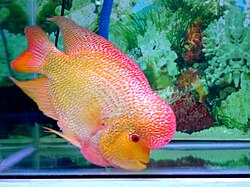
Red streaks on Flowerhorn Cichlids, known as red streak disease, indicate a serious health issue. This condition, characterized by hemorrhagic red streaks under the skin or on fins, can lead to rapid deterioration in the fish's health. Owners should recognize the urgency of treating this condition promptly and understand the potential causes, which often stem from stress, poor water quality, or infections.
Flowerhorn Cichlid Red Streaks on Body: Common Causes
Poor Water Quality
Most LikelyAmmonia and nitrite levels can cause stress, leading to red streaks.
Infections
Most LikelyBacterial infections, like Columnaris, can cause red streaks and internal bleeding.
Stress
PossibleAggressive tank mates or environmental changes can stress the fish, leading to the appearance of red streaks.
Internal Bleeding
PossibleInternal bleeding due to trauma or injury can cause red streaks to appear on the body.
Genetic Factors
Less CommonSome Flowerhorn Cichlids may be genetically predisposed to this condition.
How to Diagnose the Cause
Follow these steps in order. Stop when you identify a likely cause and move to treatment.
- Examine the fish for other signs of disease, such as swelling or loss of appetite.
Look for external signs of injury or internal issues.
- Test the water parameters for ammonia, nitrite, and nitrate levels.
Ensure the water quality is within the optimal range for Flowerhorn Cichlids.
Recommended: Water testing kit - Check for signs of aggression or stress from tank mates.
Consider the tank environment and other fish behaviors.
- Conduct a physical examination for internal bleeding or other internal issues.
This may require sedation or other veterinary procedures.
Recommended: Veterinary examination - Consult with a veterinarian specializing in ornamental fish for a definitive diagnosis.
A vet can provide further testing and treatment options.
How to Treat Flowerhorn Cichlid Red Streaks on Body
- Improve water quality by changing 25-50% of the water and maintaining optimal parameters.
Regular water changes are crucial for recovery.
- Administer appropriate antibiotics as prescribed by a veterinarian to treat bacterial infections.
Follow the vet's instructions carefully for dosage and duration.
- Remove any stressors from the tank, such as aggressive tank mates or overcrowding.
Ensure a peaceful environment for the fish to recover.
- Provide a balanced diet rich in vitamins and minerals to support the fish's immune system.
Optimize the diet for Flowerhorn Cichlids.
- Monitor the fish closely for any signs of improvement or deterioration, and adjust treatment as needed.
Regular observation is essential for effective management of the condition.
How to Prevent Flowerhorn Cichlid Red Streaks on Body
When to See a Vet
🔬 AI Symptom Checker
Not sure what's wrong? Describe your fish's symptoms to the FishCare AI and get an instant diagnosis.
Check Symptoms →Frequently Asked Questions
This guide was reviewed for biological accuracy and practical aquarium care guidance. Always test water parameters before treating a sick fish — poor water quality is the most common root cause. Consult an aquatic veterinarian if symptoms persist after 48 hours of correct treatment.
Sources: Merck Veterinary Manual — Aquarium Fishes · UF/IFAS Extension — Fish Health Management