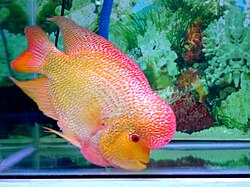
Not eating in Flowerhorn Cichlids can be due to various factors, including aggression, stress, or illness. It is a moderate concern as it can lead to weight loss and weaken the fish. Owners should first rule out dietary issues and aggression before seeking veterinary help.
Flowerhorn Cichlid Not Eating: Common Causes
Aggressive Behavior
Most LikelyFlowerhorns are known for their aggressive nature, which can cause them to ignore food or fight over it.
Stress
PossibleStress from tank mates, water quality issues, or sudden changes can lead to a refusal to eat.
Dietary Issues
PossiblePoorly balanced diet or a lack of variety can make Flowerhorns lose interest in food.
Illness
PossibleUnderlying health problems such as parasites, infections, or swim bladder issues can cause loss of appetite.
Tank Mates
Less CommonBeing bullied by tank mates can lead to not eating, especially if there are aggressive interactions.
How to Diagnose the Cause
Follow these steps in order. Stop when you identify a likely cause and move to treatment.
- Observe the fish's behavior and environment for any signs of stress or aggression.
Look for signs of bullying or aggression among tank mates.
- Check the water quality parameters (pH, temperature, ammonia, nitrite, nitrate).
Ensure the water parameters are within the optimal range for Flowerhorns.
Recommended: pH test kit - Inspect the fish for any physical signs of illness, such as bloating, spots, or irregular swimming patterns.
Look for external parasites or internal infections.
Recommended: magnifying glass - Evaluate the diet and ensure it is balanced and varied.
Flowerhorns benefit from a diet that includes both protein-rich foods and vegetables.
- Consider the tank size and decor, as overcrowding or inadequate hiding spots can cause stress.
Ensure the tank is properly sized and decorated to provide adequate space and hiding spots.
How to Treat Flowerhorn Cichlid Not Eating
- Remove any aggressive tank mates or provide a separate feeding area to prevent bullying.
If aggression is the issue, separation or tank rearrangement may be necessary.
- Improve water quality by performing regular water changes and addressing any imbalances.
Maintain optimal water parameters to reduce stress and prevent illness.
- Adjust the diet to include more varied and nutritious food options.
Offer live or frozen foods, as well as high-quality pellets or flakes.
- If illness is suspected, treat with appropriate medication following veterinary advice.
Consult a vet for a proper diagnosis and treatment plan.
- Provide a calm environment with hiding spots to reduce stress.
Use plants, rocks, or caves to create a stress-free space in the tank.
How to Prevent Flowerhorn Cichlid Not Eating
When to See a Vet
🔬 AI Symptom Checker
Not sure what's wrong? Describe your fish's symptoms to the FishCare AI and get an instant diagnosis.
Check Symptoms →Frequently Asked Questions
This guide was reviewed for biological accuracy and practical aquarium care guidance. Always test water parameters before treating a sick fish — poor water quality is the most common root cause. Consult an aquatic veterinarian if symptoms persist after 48 hours of correct treatment.
Sources: Merck Veterinary Manual — Aquarium Fishes · UF/IFAS Extension — Fish Health Management