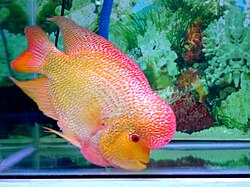
Excess mucus coating in Flowerhorn Cichlids is a serious condition often indicating stress or infection. It can lead to secondary infections and weaken the fish. Owners should first ensure water quality is optimal and diet is appropriate before seeking treatment.
Flowerhorn Cichlid Mucus Coating: Common Causes
Poor Water Quality
Most LikelyHigh levels of ammonia, nitrite, or nitrate can stress the fish and lead to mucus overproduction.
Dietary Issues
PossibleAn unbalanced diet or overfeeding can cause internal stress and lead to mucus production.
Bacterial Infections
Most LikelyBacteria such as Aeromonas or Pseudomonas can cause mucus production as a response to infection.
Parasitic Infections
PossibleParasites like Ichthyophthirius can cause stress and lead to mucus overproduction.
Environmental Stress
PossibleSudden changes in water parameters, aggression, or overcrowding can stress the fish and trigger mucus coating.
How to Diagnose the Cause
Follow these steps in order. Stop when you identify a likely cause and move to treatment.
- Perform a full water test
Check ammonia, nitrite, nitrate, pH, and temperature levels.
Recommended: Water test kit - Observe the fish's behavior and appearance
Look for signs of aggression, bloating, or other symptoms of illness.
- Inspect the mucus layer
Determine if the mucus is slimy, thick, or has a color change, which can indicate the cause.
- Check for external parasites
Use a magnifying glass to look for parasites like Ichthyophthirius.
Recommended: Magnifying glass - Assess the diet and environment
Evaluate the fish's diet and the tank conditions for any potential stressors.
How to Treat Flowerhorn Cichlid Mucus Coating
- Improve water quality
Perform regular water changes and maintain optimal water parameters.
- Adjust the diet
Ensure a balanced diet and avoid overfeeding.
- Administer antibiotics
If a bacterial infection is suspected, use an appropriate antibiotic for Flowerhorn Cichlids.
- Treat for parasites
Use an appropriate treatment for parasites if identified, such as formalin or malachite green.
- Manage stress
Reduce aggression and overcrowding, and provide a stable environment for the fish.
How to Prevent Flowerhorn Cichlid Mucus Coating
When to See a Vet
🔬 AI Symptom Checker
Not sure what's wrong? Describe your fish's symptoms to the FishCare AI and get an instant diagnosis.
Check Symptoms →Frequently Asked Questions
This guide was reviewed for biological accuracy and practical aquarium care guidance. Always test water parameters before treating a sick fish — poor water quality is the most common root cause. Consult an aquatic veterinarian if symptoms persist after 48 hours of correct treatment.
Sources: Merck Veterinary Manual — Aquarium Fishes · UF/IFAS Extension — Fish Health Management