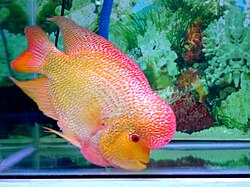
Missing scales in Flowerhorn Cichlids can be a sign of stress, disease, or poor water quality. It's important to address this promptly as it can lead to secondary infections. Flowerhorn Cichlids are known for their aggressive nature and require specific care to maintain health.
Flowerhorn Cichlid Missing Scales: Common Causes
Poor Water Quality
Most LikelyHigh levels of ammonia, nitrite, or nitrate can stress the fish and lead to scale loss.
Poor Diet
PossibleInadequate nutrition can weaken the scales, making them more prone to loss.
Parasites
Most LikelyExternal parasites like Ich or velvet can cause scales to fall off.
Bacterial Infections
Most LikelyGram-negative bacterial infections can lead to scale loss and skin erosion.
Stress
PossibleAggressive tank mates or environmental changes can stress the Flowerhorn Cichlid, causing scale loss.
How to Diagnose the Cause
Follow these steps in order. Stop when you identify a likely cause and move to treatment.
- Inspect the fish for any signs of parasites or injuries.
Look for any white spots or cotton-like growths which could indicate parasites.
- Check the water parameters using a test kit.
Measure ammonia, nitrite, nitrate, pH, and temperature levels.
Recommended: Water test kit - Observe the fish's behavior and diet.
Note any changes in feeding or aggression that may contribute to stress.
- Inspect the tank for any signs of aggression or bullying by other fish.
Ensure the Flowerhorn Cichlid is not being bullied or stressed by tank mates.
- Consider recent changes in the tank setup or diet.
Changes can cause stress and lead to scale loss.
How to Treat Flowerhorn Cichlid Missing Scales
- Improve water quality by performing regular water changes and treating ammonia, nitrite, and nitrate levels.
Change 20-30% of the water weekly to maintain good water quality.
- Adjust the diet to ensure it is balanced and meets the nutritional needs of the Flowerhorn Cichlid.
Provide a varied diet including high-quality pellets and live foods.
- If parasites are present, treat the tank with an appropriate medication as directed by a vet.
Follow the vet's instructions carefully to avoid harming the Flowerhorn Cichlid.
- Treat bacterial infections with antibiotics as prescribed by a vet.
Antibiotics should be used under veterinary supervision.
- Reduce stress by providing a suitable tank setup and ensuring there are no aggressive tank mates.
Create a stress-free environment with hiding spots and consider a single Flowerhorn Cichlid per tank if possible.
How to Prevent Flowerhorn Cichlid Missing Scales
When to See a Vet
🔬 AI Symptom Checker
Not sure what's wrong? Describe your fish's symptoms to the FishCare AI and get an instant diagnosis.
Check Symptoms →Frequently Asked Questions
This guide was reviewed for biological accuracy and practical aquarium care guidance. Always test water parameters before treating a sick fish — poor water quality is the most common root cause. Consult an aquatic veterinarian if symptoms persist after 48 hours of correct treatment.
Sources: Merck Veterinary Manual — Aquarium Fishes · UF/IFAS Extension — Fish Health Management