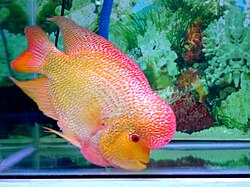
Flowerhorn Cichlids are known for their bold and aggressive nature, which can lead to stress or aggression causing them to hide constantly. This behavior is not necessarily a sign of a serious health issue but should be monitored as it could indicate underlying problems. Owners should first ensure the tank conditions are optimal for this species.
Flowerhorn Cichlid Hiding Constantly: Common Causes
Aggressive Tank Mates
Most LikelyHiding can be a response to aggression from other fish, especially in a community tank. This is common in Flowerhorn Cichlids due to their territorial nature.
Stress or Anxiety
PossibleStress from water quality issues, loud noises, or sudden changes in the tank can cause Flowerhorn Cichlids to hide. It's essential to maintain stable conditions.
Poor Water Quality
PossibleUnhealthy water parameters, such as high ammonia or nitrite levels, can stress Flowerhorn Cichlids and lead to hiding behavior.
Dietary Issues
PossibleAn unbalanced diet or lack of variety can lead to malnutrition and stress, prompting hiding behavior.
Reproductive Cycle
Less CommonFlowerhorn Cichlids may hide during the breeding season as they prepare to spawn. This is a natural behavior and not typically a cause for concern.
How to Diagnose the Cause
Follow these steps in order. Stop when you identify a likely cause and move to treatment.
- Observe the fish's behavior and appearance for any signs of injury or illness.
Look for physical signs such as ulcers, fin damage, or bloating.
- Check the water parameters using a reliable test kit.
Measure ammonia, nitrite, nitrate, pH, and temperature to ensure they are within the optimal range for Flowerhorn Cichlids.
Recommended: Water test kit - Inspect the tank for any signs of aggression or bullying by other fish.
Ensure that the tank is not overcrowded and that there are no territorial disputes.
- Evaluate the diet of the Flowerhorn Cichlid to ensure it is balanced and varied.
Include high-quality pellets, frozen foods, and live foods in the diet.
- Consider the overall tank setup, including decor and lighting, to ensure it is not causing stress.
Avoid bright lights and excessive movement near the tank.
How to Treat Flowerhorn Cichlid Hiding Constantly
- Improve water quality by performing regular water changes and maintaining optimal parameters.
Change 20-30% of the water weekly and monitor the parameters daily.
- Remove aggressive tank mates or rearrange the tank to reduce stress and aggression.
Consider keeping Flowerhorn Cichlids alone or in a species-specific tank.
- Adjust the diet to include a variety of foods and ensure it is rich in nutrients.
Feed high-quality pellets, frozen foods, and live foods like bloodworms and brine shrimp.
- Ensure the tank has a comfortable and stress-free environment with adequate hiding spots.
Add more plants, rocks, or other decor to provide cover and reduce aggression.
- If hiding is due to the breeding cycle, provide a suitable nesting area and allow the fish to spawn in peace.
Use spawning mops or plants to create a breeding site.
How to Prevent Flowerhorn Cichlid Hiding Constantly
When to See a Vet
🔬 AI Symptom Checker
Not sure what's wrong? Describe your fish's symptoms to the FishCare AI and get an instant diagnosis.
Check Symptoms →Frequently Asked Questions
This guide was reviewed for biological accuracy and practical aquarium care guidance. Always test water parameters before treating a sick fish — poor water quality is the most common root cause. Consult an aquatic veterinarian if symptoms persist after 48 hours of correct treatment.
Sources: Merck Veterinary Manual — Aquarium Fishes · UF/IFAS Extension — Fish Health Management