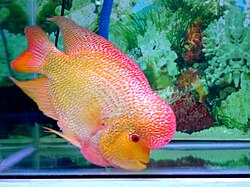
Coughing or spitting in Flowerhorn Cichlids can be indicative of various health issues, often related to respiratory or digestive problems. This behavior can be serious and should be monitored closely. Owners should first rule out environmental stressors and dietary imbalances before seeking veterinary assistance.
Flowerhorn Cichlid Coughing or Spitting: Common Causes
Respiratory Infection
Most LikelyPneumonia or swim bladder issues can cause coughing and spitting.
Poor Water Quality
Most LikelyHigh ammonia or nitrite levels can irritate the gills, leading to coughing and spitting.
Dietary Issues
Most LikelyOverfeeding, inadequate diet, or the presence of foreign objects can cause digestive discomfort.
Environmental Stress
PossibleSudden changes in water parameters or tank overcrowding can stress the fish, triggering coughing.
Internal Parasites
Less CommonParasitic infections can affect the digestive system, causing coughing and spitting.
How to Diagnose the Cause
Follow these steps in order. Stop when you identify a likely cause and move to treatment.
- Observe the fish's behavior and environment.
Look for signs of stress, aggression, or changes in water quality.
- Test the water parameters for ammonia, nitrite, and nitrate.
Use a reliable test kit to check for any abnormalities.
Recommended: Water test kit - Examine the fish for external parasites or wounds.
Use a magnifying glass to inspect the fish's body for any abnormalities.
Recommended: Magnifying glass - Evaluate the fish's diet and feeding habits.
Ensure the diet is balanced and appropriate for the species.
- Consult a veterinary aquatic specialist if the cause remains unclear.
They can provide more advanced diagnostic tools and treatment options.
How to Treat Flowerhorn Cichlid Coughing or Spitting
- Improve water quality by performing regular water changes and maintaining appropriate temperature and pH levels.
This will help alleviate stress and reduce the risk of infection.
- Adjust the diet to ensure it is balanced and easy to digest.
Remove any uneaten food from the tank to prevent overfeeding.
- Administer appropriate medication if an infection is present, as recommended by a veterinarian.
Follow the vet's instructions carefully for dosage and duration.
- Ensure the fish has adequate space and avoid overcrowding in the tank.
This will reduce stress and the risk of aggression or injury.
- Monitor the fish's recovery and continue to maintain optimal tank conditions.
Regularly check water parameters and observe the fish's behavior for any signs of improvement or recurrence.
How to Prevent Flowerhorn Cichlid Coughing or Spitting
When to See a Vet
🔬 AI Symptom Checker
Not sure what's wrong? Describe your fish's symptoms to the FishCare AI and get an instant diagnosis.
Check Symptoms →Frequently Asked Questions
This guide was reviewed for biological accuracy and practical aquarium care guidance. Always test water parameters before treating a sick fish — poor water quality is the most common root cause. Consult an aquatic veterinarian if symptoms persist after 48 hours of correct treatment.
Sources: Merck Veterinary Manual — Aquarium Fishes · UF/IFAS Extension — Fish Health Management