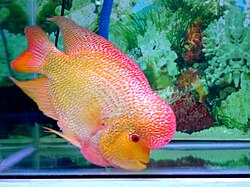
Bloated or swollen Flowerhorn Cichlids often indicate serious health issues due to their aggressive nature and size. This condition is urgent as it can rapidly deteriorate their health. Owners must be aware of potential causes and immediate actions.
Flowerhorn Cichlid Bloated or Swollen: Common Causes
Internal Bloating
Most LikelyGastrointestinal issues, such as bloating due to overfeeding or indigestion, can cause a swollen abdomen.
Kidney Disease
Most LikelyKidney malfunction can lead to fluid retention, causing bloating.
Pregnancy or Egg Binding
Most LikelyFemale Flowerhorn Cichlids may become bloated due to pregnancy or egg binding, a common issue in breeding females.
Gastroenteritis
PossibleInflammation of the stomach and intestines can result in bloating and discomfort.
Bacterial Infection
Less CommonInfections, like dropsy, can cause swelling and fluid accumulation, but this is less common.
How to Diagnose the Cause
Follow these steps in order. Stop when you identify a likely cause and move to treatment.
- Examine the fish's overall health
Observe the fish's swimming patterns, feeding behavior, and color changes. Check for any signs of injury or parasites.
- Record water parameters
Test the pH, ammonia, nitrite, and nitrate levels. Ensure the water parameters are within the ideal range for Flowerhorn Cichlids.
Recommended: pH test kit, ammonia/nitrite/nitrate test kit - Conduct a physical examination
Feel for any lumps, swelling, or irregularities in the fish's body. Observe if the scales are protruding outward, which may indicate a 'pinecone' effect.
- Check for signs of breeding
If the fish is female, look for signs of pregnancy or egg binding, which can be confirmed by an experienced vet.
- Consult with a vet
If the diagnosis is unclear or the condition is worsening, a professional diagnosis is necessary.
How to Treat Flowerhorn Cichlid Bloated or Swollen
- Adjust feeding
Reduce the frequency and portion size of feedings to prevent overfeeding. Remove uneaten food from the tank to avoid spoilage and ammonia spikes.
- Medicate if necessary
Administer appropriate medications as recommended by a vet. Follow the dosage and treatment protocol closely.
- Improve water quality
Ensure the water parameters are stable and within the optimal range for Flowerhorn Cichlids. Perform regular water changes to maintain a healthy environment.
- Provide hiding spots
Create a comfortable environment with hiding spots to reduce stress. This can help prevent further bloating and swelling due to stress.
- Monitor progress
Keep a close eye on the fish's health. If symptoms worsen, seek veterinary assistance immediately.
How to Prevent Flowerhorn Cichlid Bloated or Swollen
When to See a Vet
🔬 AI Symptom Checker
Not sure what's wrong? Describe your fish's symptoms to the FishCare AI and get an instant diagnosis.
Check Symptoms →Frequently Asked Questions
This guide was reviewed for biological accuracy and practical aquarium care guidance. Always test water parameters before treating a sick fish — poor water quality is the most common root cause. Consult an aquatic veterinarian if symptoms persist after 48 hours of correct treatment.
Sources: Merck Veterinary Manual — Aquarium Fishes · UF/IFAS Extension — Fish Health Management