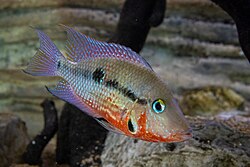
Rapid breathing in Firemouth Cichlids is often a sign of distress and requires immediate attention. This issue is serious as it may indicate a severe health problem that could lead to death if not promptly addressed. Owners should first ensure their aquarium conditions are within the optimal range for Thorichthys meeki.
Firemouth Cichlid Rapid Breathing: Common Causes
Poor Water Quality
Most LikelyHigh ammonia or nitrite levels can overwhelm the fish's respiratory system.
Temperature Fluctuations
Most LikelyDrastic changes in water temperature can stress the fish and lead to rapid breathing.
Infection or Disease
PossibleBacterial or parasitic infections can cause respiratory issues in Firemouth Cichlids.
Poor Diet
PossibleInsufficient nutrients or overfeeding can lead to health problems that cause rapid breathing.
Stress or Trauma
Less CommonTerritorial aggression, overcrowding, or handling can cause stress and rapid breathing.
How to Diagnose the Cause
Follow these steps in order. Stop when you identify a likely cause and move to treatment.
- Check the water parameters
Test for ammonia, nitrite, nitrate, pH, and temperature.
Recommended: Water testing kit - Observe the fish's behavior
Note if there are other signs of stress or disease, such as changes in color or loss of appetite.
- Inspect the aquarium environment
Ensure the tank is clean and there are no physical obstructions that could stress the fish.
- Consider recent changes
Reflect on any recent changes in the aquarium or fish's diet.
- Consult a veterinarian
If the cause is unclear or if the fish's condition worsens, seek professional help.
How to Treat Firemouth Cichlid Rapid Breathing
- Improve water quality
Perform water changes to remove pollutants and maintain the optimal pH and temperature.
- Address the root cause
Treat underlying infections or parasites, and adjust the diet if necessary.
- Reduce stress
Provide hiding spots and reduce aggression if territorial issues are present.
- Monitor and care for the fish
Keep a close eye on the fish's recovery and make necessary adjustments to its care routine.
- Follow professional advice
Follow the veterinarian's recommendations for continued care and treatment.
How to Prevent Firemouth Cichlid Rapid Breathing
When to See a Vet
🔬 AI Symptom Checker
Not sure what's wrong? Describe your fish's symptoms to the FishCare AI and get an instant diagnosis.
Check Symptoms →Frequently Asked Questions
This guide was reviewed for biological accuracy and practical aquarium care guidance. Always test water parameters before treating a sick fish — poor water quality is the most common root cause. Consult an aquatic veterinarian if symptoms persist after 48 hours of correct treatment.
Sources: Merck Veterinary Manual — Aquarium Fishes · UF/IFAS Extension — Fish Health Management