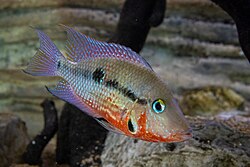
Fin rot in Firemouth Cichlids is a serious condition often caused by poor water quality or stress, leading to bacterial infections. Immediate attention is crucial to prevent further deterioration. Owners should be aware that neglecting fin rot can lead to more severe health issues and even death.
Firemouth Cichlid Fin Rot: Common Causes
Poor Water Quality
Most LikelyAmmonia, nitrite, and nitrate levels can skyrocket, leading to stress and immune system suppression.
Inadequate Diet
PossibleLack of variety or poor quality food can weaken the fish's immune system, making it more susceptible to infections.
Physical Damage
PossibleFin nipping from tank mates can open wounds that bacteria can enter, causing fin rot.
Stress
PossibleChanges in the tank environment, aggressive tank mates, or lack of hiding spots can stress the fish and weaken its immune system.
Poor Tank Maintenance
Less CommonRegular water changes and tank cleaning are essential to prevent the buildup of harmful bacteria.
How to Diagnose the Cause
Follow these steps in order. Stop when you identify a likely cause and move to treatment.
- Inspect the fish's fins for signs of discoloration, fraying, or loss of tissue.
Look for redness or darkening along the fin edges.
- Check the water parameters for ammonia, nitrite, and nitrate levels.
Use a water test kit to measure these parameters.
Recommended: Water test kit - Observe the fish's behavior for signs of stress or aggression.
Changes in behavior can indicate stress that may contribute to fin rot.
- Examine the tank for any physical damage to the fish's body, such as fin nipping.
Look for bite marks or wounds on the fins and body.
- Consult with a veterinarian specializing in aquatic animals for a definitive diagnosis and treatment plan.
A vet can provide additional insights and specialized care.
How to Treat Firemouth Cichlid Fin Rot
- Perform frequent water changes to lower ammonia, nitrite, and nitrate levels.
Change 20-30% of the water daily to maintain optimal water quality.
- Increase the tank's aeration to improve oxygen levels and support the fish's recovery.
Use an air stone or powerhead to increase water movement.
- Administer an appropriate antibiotic to treat the bacterial infection, following the veterinarian's instructions.
Never use human antibiotics without veterinary guidance.
- Provide a varied diet rich in protein and vitamins to support the fish's immune system.
Feeding high-quality cichlid pellets or live foods can be beneficial.
- Ensure the tank environment is stress-free by reducing aggression and providing hiding spots.
Remove aggressive tank mates or rearrange the tank to create more hiding spots for the fish.
How to Prevent Firemouth Cichlid Fin Rot
When to See a Vet
🔬 AI Symptom Checker
Not sure what's wrong? Describe your fish's symptoms to the FishCare AI and get an instant diagnosis.
Check Symptoms →Frequently Asked Questions
This guide was reviewed for biological accuracy and practical aquarium care guidance. Always test water parameters before treating a sick fish — poor water quality is the most common root cause. Consult an aquatic veterinarian if symptoms persist after 48 hours of correct treatment.
Sources: Merck Veterinary Manual — Aquarium Fishes · UF/IFAS Extension — Fish Health Management