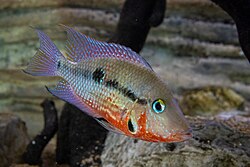
Darting or flashing in Firemouth Cichlids often indicates an external irritant, such as a parasite, fin rot, or poor water quality, which can be distressing but typically manageable. It's important for owners to first check the water parameters and consider recent changes before taking action. The behavior can be quite serious if not addressed promptly, potentially leading to more severe health issues.
Firemouth Cichlid Darting or Flashing: Common Causes
Parasites
Most LikelyCommonly Ich or Velvet, causing visible parasites or spots on the fish.
Fin Rot
Most LikelyCaused by poor water quality, often seen as frayed or eroded fins.
Poor Water Quality
PossibleHigh ammonia or nitrite levels can stress the fish, leading to erratic movements.
Poor Diet
PossibleLack of variety or proper nutrition can lead to stress and abnormal behavior.
Habitat Stress
Less CommonOvercrowding, aggression, or changes in water parameters can stress the fish.
How to Diagnose the Cause
Follow these steps in order. Stop when you identify a likely cause and move to treatment.
- Examine the fish closely for any visible parasites or signs of fin damage.
Use a magnifying glass if necessary.
Recommended: magnifying glass - Check the water parameters for ammonia, nitrite, and nitrate levels.
Test with a reliable testing kit.
Recommended: water testing kit - Inspect the tank for any signs of aggression or overcrowding.
Observe interactions with other fish or tank decor.
- Review recent changes to the tank or diet.
Identify any new additions or changes that might have affected the fish.
- Observe the fish's diet and feeding behavior.
Ensure a balanced and varied diet is being provided.
How to Treat Firemouth Cichlid Darting or Flashing
- Treat parasites with appropriate medication as per the vet's instructions.
Follow dosage and treatment duration closely.
- Improve water quality by performing regular water changes and maintaining proper pH levels.
Remove any decaying matter or uneaten food.
- Consider a change in diet if the fish's condition does not improve.
Provide high-quality, varied foods and increase the frequency of feedings.
- Remove any aggressive tankmates or address aggression issues.
Ensure the tank provides ample space and territories.
- Consult a vet for advice if the behavior persists or worsens.
They may recommend further diagnostic tests or treatments.
How to Prevent Firemouth Cichlid Darting or Flashing
When to See a Vet
🔬 AI Symptom Checker
Not sure what's wrong? Describe your fish's symptoms to the FishCare AI and get an instant diagnosis.
Check Symptoms →Frequently Asked Questions
This guide was reviewed for biological accuracy and practical aquarium care guidance. Always test water parameters before treating a sick fish — poor water quality is the most common root cause. Consult an aquatic veterinarian if symptoms persist after 48 hours of correct treatment.
Sources: Merck Veterinary Manual — Aquarium Fishes · UF/IFAS Extension — Fish Health Management