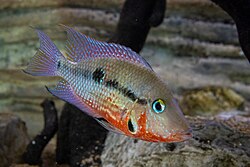
Coughing or spitting in Firemouth Cichlids often indicates a respiratory issue, which can be serious if left untreated. Owners should first ensure the tank conditions are optimal and the fish is not stressed. This problem can be a sign of poor water quality, infections, or parasitic infestations.
Firemouth Cichlid Coughing or Spitting: Common Causes
Poor Water Quality
Most LikelyHigh levels of ammonia or nitrite can irritate the fish's gills, causing coughing or spitting.
Infection
Most LikelyBacterial or fungal infections can lead to respiratory distress, prompting the fish to cough or spit.
Parasitic Infestation
PossibleParasites such as Ich can cause respiratory symptoms in Firemouth Cichlids.
Stress
PossibleStress from tank mates, overcrowding, or sudden changes in water parameters can trigger coughing or spitting.
Dietary Issues
Less CommonOvereating or consuming unsuitable food can cause digestive discomfort and lead to coughing or spitting.
How to Diagnose the Cause
Follow these steps in order. Stop when you identify a likely cause and move to treatment.
- Observe the fish's behavior and appearance
Look for signs of infection, such as redness or ulcers, and note any changes in swimming patterns.
- Check water parameters
Test for ammonia, nitrite, nitrate, pH, and temperature. Ensure they are within the optimal range for Firemouth Cichlids.
Recommended: Water test kit - Inspect the tank environment
Ensure the tank is well-maintained with proper filtration and adequate space for the fish to swim.
- Observe feeding habits
Check if the fish is eating properly and if the diet is balanced and appropriate for its species.
- Consider recent changes
Reflect on any recent changes in the tank or diet that might have triggered the symptoms.
How to Treat Firemouth Cichlid Coughing or Spitting
- Improve water quality
Perform regular water changes and ensure the filter is functioning properly to maintain optimal water parameters.
- Administer appropriate medication
Use antibiotics or antiparasitic treatments as recommended by a veterinarian, if an infection or infestation is suspected.
- Relieve stress
Remove aggressive tank mates, reduce tank overcrowding, and provide hiding spots to reduce stress levels.
- Adjust diet
Ensure the fish is receiving a balanced diet suitable for its nutritional needs and avoid overfeeding.
- Monitor and continue treatment
Continue to monitor the fish's condition and treatment progress, adjusting as necessary under veterinary guidance.
How to Prevent Firemouth Cichlid Coughing or Spitting
When to See a Vet
🔬 AI Symptom Checker
Not sure what's wrong? Describe your fish's symptoms to the FishCare AI and get an instant diagnosis.
Check Symptoms →Frequently Asked Questions
This guide was reviewed for biological accuracy and practical aquarium care guidance. Always test water parameters before treating a sick fish — poor water quality is the most common root cause. Consult an aquatic veterinarian if symptoms persist after 48 hours of correct treatment.
Sources: Merck Veterinary Manual — Aquarium Fishes · UF/IFAS Extension — Fish Health Management