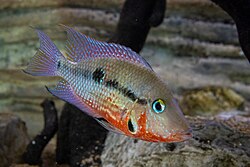
Bulging eyes, or Popeye, in Firemouth Cichlids is a serious condition often indicating an underlying health issue. It's crucial to act quickly as it can lead to blindness or death. Owners should first rule out common causes like poor water quality, injury, or dietary deficiencies before seeking veterinary assistance.
Firemouth Cichlid Bulging Eyes (Popeye): Common Causes
Poor Water Quality
Most LikelyHigh levels of ammonia, nitrite, or nitrate can cause stress and lead to Popeye.
Injury
Most LikelyPhysical trauma from tank mates or decorations can cause eye bulging.
Dietary Deficiencies
PossibleLack of essential nutrients, particularly vitamin C, can weaken the eyes and lead to Popeye.
Bacterial Infection
PossibleBacteria such as Aeromonas or Pseudomonas can infect the eye socket and cause Popeye.
Genetic Factors
Less CommonSome individuals may have a predisposition to Popeye due to genetics.
How to Diagnose the Cause
Follow these steps in order. Stop when you identify a likely cause and move to treatment.
- Observe the fish's behavior and appearance for other signs of illness.
Look for signs of stress, loss of appetite, or other symptoms.
- Check the water parameters for ammonia, nitrite, and nitrate levels.
Use a water test kit to measure these parameters.
Recommended: Water test kit - Inspect the fish for physical injuries, such as cuts or abrasions around the eyes.
Gently examine the fish without causing further stress.
- Review the fish's diet to ensure it's balanced and includes vitamin C-rich foods.
Firemouth Cichlids require a varied diet with high-quality pellets and live foods.
- Consult with a veterinarian specializing in fish health for a definitive diagnosis and treatment plan.
They may perform additional tests or recommend specific treatments.
How to Treat Firemouth Cichlid Bulging Eyes (Popeye)
- Improve water quality by reducing ammonia, nitrite, and nitrate levels.
Perform regular water changes and use water conditioners if necessary.
- Treat any bacterial infections with appropriate antibiotics as prescribed by a vet.
Follow the vet's instructions carefully.
- Adjust the diet to include vitamin C-rich foods or supplements.
Provide vitamin C in the form of fresh vegetables or vitamin C tablets.
- Remove any aggressive tank mates or decorations that may cause injury.
Ensure the tank is safe and stress-free for the fish.
- Monitor the fish's recovery and continue treatment until the eyes return to normal.
Regularly check the fish's health and adjust treatment as needed.
How to Prevent Firemouth Cichlid Bulging Eyes (Popeye)
When to See a Vet
🔬 AI Symptom Checker
Not sure what's wrong? Describe your fish's symptoms to the FishCare AI and get an instant diagnosis.
Check Symptoms →Frequently Asked Questions
This guide was reviewed for biological accuracy and practical aquarium care guidance. Always test water parameters before treating a sick fish — poor water quality is the most common root cause. Consult an aquatic veterinarian if symptoms persist after 48 hours of correct treatment.
Sources: Merck Veterinary Manual — Aquarium Fishes · UF/IFAS Extension — Fish Health Management