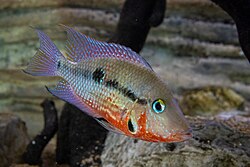
Sudden aggression in Firemouth Cichlids often stems from territorial disputes or stress. This behavior can escalate if not addressed, potentially leading to severe injuries. Owners must first ensure their fish's environment and diet are optimal.
Firemouth Cichlid Aggressive: Common Causes
Territorial Disputes
Most LikelyFiremouth Cichlids are naturally aggressive, especially over territory. Males can become particularly territorial during breeding season.
Stress
PossibleChanges in water parameters, overcrowding, or lack of hiding spots can stress Firemouth Cichlids, triggering aggression.
Dietary Issues
PossibleInadequate nutrition can cause health problems that lead to aggressive behavior.
Illness
PossibleUnderlying health issues can manifest as aggression. Signs include loss of appetite or coloration changes.
Age and Size
Less CommonJuvenile Firemouth Cichlids may be more aggressive until they reach maturity, or as they grow larger, their aggression can increase.
How to Diagnose the Cause
Follow these steps in order. Stop when you identify a likely cause and move to treatment.
- Observe the fish's environment
Check water parameters, tank cleanliness, and presence of adequate hiding spots.
Recommended: pH test kit - Monitor tank mates
Assess if aggression is targeted at specific fish. Consider introducing a new fish or changing the tank layout to alter territories.
- Evaluate diet
Ensure the fish is receiving a balanced diet. Overfeeding or feeding the wrong types of food can lead to aggression.
- Assess for signs of illness
Look for any physical symptoms, such as discoloration, loss of appetite, or fin damage.
- Consider the fish's age and size
If the fish is young or has recently grown, it may be exhibiting normal, albeit aggressive, behavior.
How to Treat Firemouth Cichlid Aggressive
- Improve water quality
Regular water changes and maintaining optimal pH and temperature levels are crucial for reducing stress.
- Provide adequate space
Ensure the tank is large enough to accommodate the fish's size and territorial needs.
- Offer hiding spots
Add plants or decorations to create territories and reduce aggression.
- Adjust the diet
Feeding high-quality, balanced food and avoiding overfeeding can help alleviate aggression.
- Seek veterinary advice if aggression persists
Persistent aggression could indicate an underlying health issue requiring professional evaluation.
How to Prevent Firemouth Cichlid Aggressive
When to See a Vet
🔬 AI Symptom Checker
Not sure what's wrong? Describe your fish's symptoms to the FishCare AI and get an instant diagnosis.
Check Symptoms →Frequently Asked Questions
This guide was reviewed for biological accuracy and practical aquarium care guidance. Always test water parameters before treating a sick fish — poor water quality is the most common root cause. Consult an aquatic veterinarian if symptoms persist after 48 hours of correct treatment.
Sources: Merck Veterinary Manual — Aquarium Fishes · UF/IFAS Extension — Fish Health Management