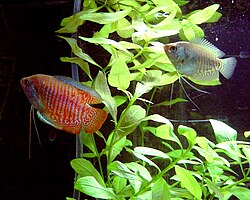
Torn or ragged fins in Dwarf Gouramis are often due to stress, poor water quality, or aggression. This issue can be serious if not addressed promptly, as it can lead to secondary infections. Owners should first ensure the tank conditions are optimal and rule out any aggressive tank mates.
Dwarf Gourami Torn Fins: Common Causes
Poor Water Quality
Most LikelyHigh levels of ammonia, nitrite, or nitrate can stress the fish and lead to fin damage.
Aggressive Tank Mates
Most LikelyOther fish can cause physical damage to the fins, especially during breeding season.
Dietary Issues
PossibleAn unbalanced diet or lack of variety can weaken the fins and make them more susceptible to damage.
Poor Tank Maintenance
PossibleNeglecting regular water changes and tank cleaning can lead to a buildup of harmful substances.
Genetic Factors
Less CommonSome Dwarf Gouramis may be predisposed to fin issues due to their genetic makeup.
How to Diagnose the Cause
Follow these steps in order. Stop when you identify a likely cause and move to treatment.
- Observe the fish's behavior and appearance for any other signs of stress or illness.
Look for changes in color, appetite, or activity levels.
- Check the water parameters using a test kit for ammonia, nitrite, nitrate, pH, and hardness.
Ensure the water quality is within the recommended range for Dwarf Gouramis.
Recommended: Water test kit - Inspect the tank for any signs of aggression or bullying among the fish.
Identify any fish that may be responsible for the fin damage.
- Evaluate the fish's diet and ensure it is balanced and varied.
Provide a mix of live, frozen, and freeze-dried foods, as well as fresh vegetables.
- Assess the tank's cleanliness and consider performing a partial water change if necessary.
Remove any debris or uneaten food that could be contributing to poor water quality.
How to Treat Dwarf Gourami Torn Fins
- Perform regular water changes to improve water quality and reduce stress on the fish.
Change 20-30% of the water weekly.
- Add an aquarium salt or fin repair supplements to the water to aid in healing.
Follow the manufacturer's instructions for dosage.
- Remove any aggressive tank mates or provide more space if necessary to reduce stress and aggression.
Consider using a separate tank for the aggressive fish if possible.
- Feed a balanced diet rich in vitamins and minerals to support fin health.
Include high-quality flake food, live foods, and fresh vegetables.
- Monitor the fish closely for any signs of improvement or worsening of the condition.
Adjust the treatment plan as needed based on the fish's response.
How to Prevent Dwarf Gourami Torn Fins
When to See a Vet
🔬 AI Symptom Checker
Not sure what's wrong? Describe your fish's symptoms to the FishCare AI and get an instant diagnosis.
Check Symptoms →Frequently Asked Questions
This guide was reviewed for biological accuracy and practical aquarium care guidance. Always test water parameters before treating a sick fish — poor water quality is the most common root cause. Consult an aquatic veterinarian if symptoms persist after 48 hours of correct treatment.
Sources: Merck Veterinary Manual — Aquarium Fishes · UF/IFAS Extension — Fish Health Management