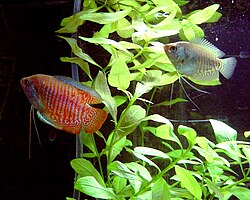
Red streaks on Dwarf Gourami bodies often indicate severe internal bleeding, usually due to parasitic infections, poor water quality, or physical injuries. This is a highly urgent issue as it can lead to sudden death. Owners must immediately assess the cause and provide immediate treatment.
Dwarf Gourami Red Streaks on Body: Common Causes
Parasitic Infections
Most LikelyCycloptic or Ich are common causes. Poor water quality and crowded tanks exacerbate risk.
Poor Water Quality
Most LikelyAmmonia and nitrite levels above acceptable thresholds can lead to internal hemorrhaging.
Physical Injury
PossibleFights or collisions with tank decorations can cause injury and subsequent red streaks.
Bacterial Infections
PossiblePoorly maintained water quality can lead to secondary bacterial infections, worsening the condition.
Toxicity
Less CommonHigh levels of heavy metals or toxic chemicals in the water can also cause hemorrhaging.
How to Diagnose the Cause
Follow these steps in order. Stop when you identify a likely cause and move to treatment.
- Examine the fish closely for external signs of injury or parasites.
Look for ich or cyclops on the body and fins.
- Check the water parameters using an aquarium test kit.
Ensure ammonia and nitrite levels are at zero, and nitrate levels are within the safe range.
Recommended: aquarium test kit - Monitor water quality and the overall health of other tank inhabitants.
Look for signs of similar issues in other fish to assess if it's a tank-wide issue.
- Observe the fish's behavior for changes in feeding or swimming patterns.
Stress can cause fish to behave differently, indicating potential internal issues.
- If available, consult a vet specializing in aquatic animals for a definitive diagnosis.
They may use a microscope to identify parasites or other issues.
Recommended: microscope
How to Treat Dwarf Gourami Red Streaks on Body
- Quarantine the affected fish if possible to prevent the spread of parasites or bacteria.
Maintain water parameters at the same levels as the main tank.
- Treat the fish with appropriate medication as recommended by a veterinarian.
Medications for ich or bacterial infections should be used.
- Improve water quality by changing water and maintaining optimal pH levels.
Use a water dechlorinator if necessary.
- Provide the fish with a healthy diet and ensure it is not stressed by tank mates or decorations.
Feeding a balanced diet and ensuring adequate swimming space is important.
- Monitor the fish's response to treatment and continue treatment as directed by a vet.
Treatment may need to be adjusted based on the fish's recovery.
How to Prevent Dwarf Gourami Red Streaks on Body
When to See a Vet
🔬 AI Symptom Checker
Not sure what's wrong? Describe your fish's symptoms to the FishCare AI and get an instant diagnosis.
Check Symptoms →Frequently Asked Questions
This guide was reviewed for biological accuracy and practical aquarium care guidance. Always test water parameters before treating a sick fish — poor water quality is the most common root cause. Consult an aquatic veterinarian if symptoms persist after 48 hours of correct treatment.
Sources: Merck Veterinary Manual — Aquarium Fishes · UF/IFAS Extension — Fish Health Management