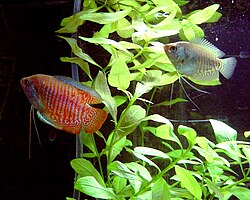
Rapid breathing in Dwarf Gouramis, Trichogaster lalius, is a critical sign indicating stress or illness. It can be serious and requires immediate attention. Owners should first ensure water quality is optimal and the tank is stress-free for the fish.
Dwarf Gourami Rapid Breathing: Common Causes
Poor Water Quality
Most LikelyHigh ammonia or nitrite levels can cause stress and rapid breathing.
Temperature Fluctuations
PossibleSudden changes in water temperature can shock the fish and lead to rapid breathing.
Poor Diet
PossibleA lack of variety in the diet or insufficient nutrition can weaken the fish's immune system, making it more susceptible to respiratory issues.
Infection
PossibleBacterial or parasitic infections can affect the gills and lead to rapid breathing.
Stress from Tank Mates
Less CommonAggressive tank mates or overcrowding can stress the Dwarf Gourami, resulting in rapid breathing.
How to Diagnose the Cause
Follow these steps in order. Stop when you identify a likely cause and move to treatment.
- Measure water parameters such as ammonia, nitrite, nitrate, pH, and temperature.
Use a water test kit to ensure the water quality is within the optimal range for Dwarf Gouramis.
Recommended: Water test kit - Inspect the fish for signs of external parasites or infections.
Look for any unusual spots, lesions, or slime on the fish's body or gills.
- Observe the fish's behavior and environment for signs of stress or aggression.
Check if the fish is hiding frequently, or if there are signs of aggression from tank mates.
- Review the fish's diet and feeding schedule.
Ensure the fish is receiving a balanced and varied diet.
- Consider recent changes in the tank setup or water parameters.
Changes can stress the fish and affect its breathing.
How to Treat Dwarf Gourami Rapid Breathing
- Improve water quality by changing 25-30% of the tank water daily.
This helps to reduce ammonia and nitrite levels and maintain optimal pH and temperature.
- If an infection is suspected, treat the tank with an appropriate aquarium salt or antiparasitic medication.
Follow the instructions on the product for dosage and treatment duration.
- Ensure the fish has access to clean, well-oxygenated water at all times.
Use an air stone or powerhead to increase water movement and aeration.
- Provide a varied diet with high-quality flake food, pellets, and live or frozen foods if possible.
This will support the fish's immune system and overall health.
- If stress is the issue, consider reducing the number of tank mates or providing more hiding spots.
This will help to reduce aggression and stress levels in the tank.
How to Prevent Dwarf Gourami Rapid Breathing
When to See a Vet
🔬 AI Symptom Checker
Not sure what's wrong? Describe your fish's symptoms to the FishCare AI and get an instant diagnosis.
Check Symptoms →Frequently Asked Questions
This guide was reviewed for biological accuracy and practical aquarium care guidance. Always test water parameters before treating a sick fish — poor water quality is the most common root cause. Consult an aquatic veterinarian if symptoms persist after 48 hours of correct treatment.
Sources: Merck Veterinary Manual — Aquarium Fishes · UF/IFAS Extension — Fish Health Management