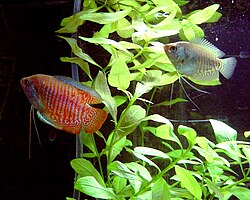
Dwarf Gouramis may stop eating due to stress, illness, or changes in their environment. This behavior can be serious as it may indicate underlying health issues. Owners should first ensure the tank conditions are optimal and the fish is not stressed before seeking veterinary assistance.
Dwarf Gourami Not Eating: Common Causes
Poor Water Quality
Most LikelyAmmonia or nitrite levels can be toxic to Dwarf Gouramis, causing stress and loss of appetite.
Environmental Changes
Most LikelySudden changes in water temperature, pH, or tank decorations can stress the fish and lead to a refusal of food.
Illness
PossibleHealth issues such as internal parasites, bacterial infections, or fungal diseases can cause appetite loss.
Dietary Issues
PossibleFeeding the wrong type of food or overfeeding can lead to a loss of interest in eating.
Behavioral Issues
Less CommonCompetition for food or bullying by tankmates can cause a Dwarf Gourami to stop eating.
How to Diagnose the Cause
Follow these steps in order. Stop when you identify a likely cause and move to treatment.
- Check the water parameters for ammonia, nitrite, and nitrate levels.
Use a test kit to ensure the water quality is within the Dwarf Gourami's optimal range.
Recommended: Water test kit - Observe the fish for signs of illness, such as bloating, spots, or clamped fins.
Look for any physical symptoms that may indicate a health issue.
- Assess the tank environment for any recent changes or stressors.
Ensure the tank is well-maintained and the fish has a comfortable environment.
- Evaluate the diet and feeding routine.
Check if the food is appropriate and if the feeding schedule is consistent.
- Monitor the behavior of the fish and its interactions with tankmates.
Look for signs of bullying or aggression that may be causing stress.
How to Treat Dwarf Gourami Not Eating
- Improve water quality by performing regular water changes and treating for ammonia or nitrite if necessary.
Maintain the optimal water parameters for Dwarf Gouramis.
- Isolate the fish if it is showing signs of illness to prevent the spread of disease.
Provide a separate tank with the same water parameters for recovery.
- Adjust the diet to include high-quality, varied food options that the fish prefers.
Offer live or frozen foods, along with high-protein pellets or flakes.
- If bullying is suspected, rehome aggressive tankmates or provide more space for the Dwarf Gourami.
Ensure the fish feels safe and can access food without competition.
- Monitor the fish's response to the changes and consult a veterinarian if the problem persists.
Regular observation is key to understanding the fish's recovery progress.
How to Prevent Dwarf Gourami Not Eating
When to See a Vet
🔬 AI Symptom Checker
Not sure what's wrong? Describe your fish's symptoms to the FishCare AI and get an instant diagnosis.
Check Symptoms →Frequently Asked Questions
This guide was reviewed for biological accuracy and practical aquarium care guidance. Always test water parameters before treating a sick fish — poor water quality is the most common root cause. Consult an aquatic veterinarian if symptoms persist after 48 hours of correct treatment.
Sources: Merck Veterinary Manual — Aquarium Fishes · UF/IFAS Extension — Fish Health Management