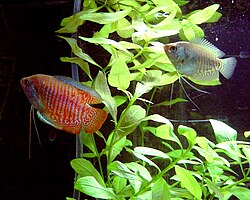
Lethargic behavior in Dwarf Gouramis often stems from stress, poor water quality, or underlying health issues. This can be a sign of serious illness, so prompt monitoring and care are essential. Owners should first check water parameters and rule out environmental factors before considering medical treatments.
Dwarf Gourami Lethargic or Inactive: Common Causes
Poor Water Quality
Most LikelyHigh levels of ammonia, nitrite, or nitrate can stress Dwarf Gouramis and lead to lethargy.
Temperature Fluctuations
Most LikelySudden changes in water temperature can shock the fish and cause them to become inactive.
Insufficient Oxygen
Most LikelyLow oxygen levels can make it difficult for Dwarf Gouramis to breathe, resulting in lethargy.
Dietary Issues
PossibleUnbalanced or poor quality food can lead to malnutrition and subsequent inactivity.
Stress from Tank Mates
PossibleAggressive tank mates or overcrowding can cause stress and lead to lethargic behavior.
How to Diagnose the Cause
Follow these steps in order. Stop when you identify a likely cause and move to treatment.
- Check the water parameters
Test for ammonia, nitrite, nitrate, pH, and temperature.
Recommended: Water test kit - Inspect the fish for signs of injury or disease
Look for any visible abnormalities on the fish's body.
- Observe the fish's diet and feeding behavior
Ensure the fish is eating and that the diet is appropriate for their nutritional needs.
- Assess the tank environment
Check for overcrowding, aggressive tank mates, or poor tank maintenance.
- Monitor the fish's behavior over time
Keep a log of the fish's activity levels to track changes.
How to Treat Dwarf Gourami Lethargic or Inactive
- Adjust water parameters
Change water to correct pH and temperature, and ensure adequate oxygen levels.
- Improve diet
Feed high-quality, balanced food and ensure the fish is consuming it.
- Resolve tank issues
Remove aggressive tank mates, reduce overcrowding, and maintain good tank hygiene.
- Consider using stress-reducing agents
Use products like stress coat to help the fish recover.
- Consult a vet if the fish does not improve
Seek professional advice if the fish remains lethargic after addressing the above issues.
How to Prevent Dwarf Gourami Lethargic or Inactive
When to See a Vet
🔬 AI Symptom Checker
Not sure what's wrong? Describe your fish's symptoms to the FishCare AI and get an instant diagnosis.
Check Symptoms →Frequently Asked Questions
This guide was reviewed for biological accuracy and practical aquarium care guidance. Always test water parameters before treating a sick fish — poor water quality is the most common root cause. Consult an aquatic veterinarian if symptoms persist after 48 hours of correct treatment.
Sources: Merck Veterinary Manual — Aquarium Fishes · UF/IFAS Extension — Fish Health Management