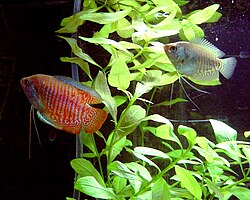
Dwarf Gouramis, known for their peaceful demeanor, may jump out of the tank due to stress or dissatisfaction with their environment, which can be quite serious and lead to injury or even death. Before attempting any solutions, it's crucial to first rule out any potential underlying health issues.
Dwarf Gourami Jumping Out of Tank: Common Causes
Poor Water Quality
Most LikelyUnbalanced pH or ammonia levels can stress Dwarf Gouramis and prompt them to jump out of the tank.
Insufficient Space
Most LikelyDwarf Gouramis are active and require plenty of space to swim, so overcrowded tanks can cause stress.
Improper Tank Aeration
Most LikelyInsufficient oxygen can make the fish uncomfortable, causing them to surface or jump out in search of air.
Lack of Hiding Spots
PossibleThese fish need cover and places to feel secure; without them, they may become stressed and attempt to escape.
Water Temperature Fluctuations
Less CommonFluctuations outside the recommended range can stress Dwarf Gouramis, prompting them to leap out of the tank.
How to Diagnose the Cause
Follow these steps in order. Stop when you identify a likely cause and move to treatment.
- Check water parameters (pH, ammonia, nitrite, nitrate) using a reliable test kit.
This helps identify any water quality issues that could be causing stress.
Recommended: pH test kit, ammonia test kit - Measure the tank dimensions and calculate the number of fish it holds. Ensure it's appropriate for the species' size and activity level.
Ensure the tank provides ample space for your Dwarf Gouramis to swim without feeling cramped.
- Observe the aeration and oxygen levels in the tank. Use an air stone or powerhead if necessary to increase aeration.
Ensure the tank is well-aerated to provide adequate oxygen for the fish.
- Inspect the tank for adequate hiding spots or cover, like plants, caves, or bogwood.
Provide places for your Dwarf Gouramis to rest and feel safe.
- Monitor the water temperature continuously. Use a reliable thermometer to check for fluctuations.
Keep the water temperature consistent with the recommended range of 25.0–28.0°C.
- Rule out any signs of illness, such as clamped fins, loss of appetite, or spots on the body.
Underlying health issues can lead to stress and jumping behaviors. Seek veterinary advice if any symptoms are present.
Recommended: magnifying glass or aquarium magnifying loupe
How to Treat Dwarf Gourami Jumping Out of Tank
- Adjust the water parameters to the recommended levels for Dwarf Gouramis by using appropriate water treatments and changes.
- If overcrowding is the issue, remove any non-essential decorations or other fish to increase swimming space.
- Increase aeration in the tank using an air stone or powerhead, and maintain proper oxygen levels.
- Add additional hiding spots or plants to the tank, providing more cover and security for the fish.
- Stabilize the water temperature by using a reliable heater and ensuring the tank is not exposed to sudden temperature changes.
- If stress is due to a recent change, wait for the fish to acclimate and consider using stress-reducing products, like aquarium salts, following manufacturer instructions.
How to Prevent Dwarf Gourami Jumping Out of Tank
When to See a Vet
🔬 AI Symptom Checker
Not sure what's wrong? Describe your fish's symptoms to the FishCare AI and get an instant diagnosis.
Check Symptoms →Frequently Asked Questions
This guide was reviewed for biological accuracy and practical aquarium care guidance. Always test water parameters before treating a sick fish — poor water quality is the most common root cause. Consult an aquatic veterinarian if symptoms persist after 48 hours of correct treatment.
Sources: Merck Veterinary Manual — Aquarium Fishes · UF/IFAS Extension — Fish Health Management