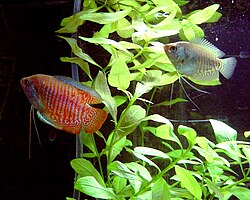
Fuzzy white growth in Dwarf Gouramis is a serious fungal infection that requires immediate attention. It can spread rapidly and weaken the fish, potentially leading to death. Owners must understand the urgency and take immediate action.
Dwarf Gourami Fuzzy Growth: Common Causes
Poor Water Quality
Most LikelyUnbalanced pH, high ammonia or nitrite levels can weaken the fish's immune system, making them more susceptible to fungal infections.
Inadequate Tank Maintenance
PossibleRegularly cleaning the tank and removing uneaten food can prevent the build-up of harmful bacteria and fungi.
Stress
PossibleStress from aggression, overcrowding, or rapid changes in water parameters can weaken the Dwarf Gourami's immune system, increasing the risk of fungal infections.
Introducing New Fish
Less CommonBringing in new fish can introduce pathogens into the tank, leading to fungal outbreaks.
Overcrowding
Less CommonOvercrowded tanks can lead to increased aggression and competition for food, which can stress the fish and weaken their immune systems.
How to Diagnose the Cause
Follow these steps in order. Stop when you identify a likely cause and move to treatment.
- Inspect the affected fish for cotton-like white or grey fungal growth on the body, mouth, or fins.
Look for fluffy, cottony patches that may be moist or flake off easily.
- Check the water parameters for ammonia, nitrite, and nitrate levels.
Use a water test kit to measure these levels. High levels indicate poor water quality.
Recommended: Water test kit - Observe the fish's behavior and overall health.
Look for signs of stress or other health issues, which may be contributing factors.
- Consider the tank environment, including tank size, water quality, and tank mates.
Analyze if any recent changes or issues in the tank could be causing stress.
- Consult with a veterinarian experienced with aquatic species if symptoms persist or worsen.
A vet can provide a more accurate diagnosis and treatment plan.
How to Treat Dwarf Gourami Fuzzy Growth
- Improve water quality by performing regular water changes (25-30% weekly).
Maintain water parameters within the Dwarf Gourami's optimal range.
- Use an anti-fungal treatment as directed by a veterinarian.
Follow the instructions carefully to avoid over-treatment or misuse.
- Remove any aggressive tank mates or overcrowding issues to reduce stress.
Ensure the Dwarf Gourami has enough space and a stress-free environment.
- Consider adding a beneficial bacteria to the tank to maintain a healthy balance.
This can help prevent future outbreaks of fungal infections.
- Monitor the fish's progress and continue treatment until the fungal growth is completely gone.
Do not discontinue treatment until the problem is fully resolved to prevent recurrence.
How to Prevent Dwarf Gourami Fuzzy Growth
When to See a Vet
🔬 AI Symptom Checker
Not sure what's wrong? Describe your fish's symptoms to the FishCare AI and get an instant diagnosis.
Check Symptoms →Frequently Asked Questions
This guide was reviewed for biological accuracy and practical aquarium care guidance. Always test water parameters before treating a sick fish — poor water quality is the most common root cause. Consult an aquatic veterinarian if symptoms persist after 48 hours of correct treatment.
Sources: Merck Veterinary Manual — Aquarium Fishes · UF/IFAS Extension — Fish Health Management