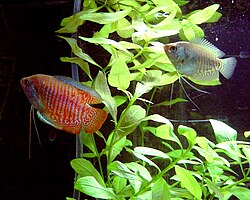
Fin rot in Dwarf Gouramis is a serious bacterial infection that can spread rapidly, affecting the fish's overall health. It's crucial to identify and treat it promptly. Owners should be aware that poor water quality, injury, and stress are common triggers.
Dwarf Gourami Fin Rot: Common Causes
Poor Water Quality
Most LikelyAmmonia and nitrite levels can cause stress and weaken the fish's immune system, making them susceptible to fin rot.
Injury
Most LikelyPhysical damage to the fins can create an entry point for bacteria, leading to fin rot.
Stress
PossibleStress from overcrowding, aggression, or changes in water parameters can weaken the fish's immune system, predisposing them to fin rot.
Poor Diet
PossibleA lack of essential nutrients can weaken the fish's immune system, making them more prone to infections like fin rot.
Water Temperature Fluctuations
Less CommonSudden changes in water temperature can stress the fish and weaken their immune system, contributing to fin rot.
How to Diagnose the Cause
Follow these steps in order. Stop when you identify a likely cause and move to treatment.
- Observe the fish's fins for signs of discoloration, ragged edges, and frayed tips.
Fin rot is characterized by the deterioration of fin edges with a discolored or ragged border.
- Check the water parameters for ammonia, nitrite, and nitrate levels.
High levels of ammonia and nitrite are indicators of poor water quality.
Recommended: Water test kit - Inspect the tank for any signs of injury or stress.
Physical damage or stress can contribute to the development of fin rot.
- Monitor the fish's behavior for signs of stress or aggression.
Stress can weaken the fish's immune system, making them more susceptible to infections.
- Consider the fish's diet and water temperature history.
Poor diet and temperature fluctuations can weaken the fish's immune system.
How to Treat Dwarf Gourami Fin Rot
- Increase the frequency of water changes to maintain clean water conditions.
Regular water changes help remove harmful substances and reduce stress on the fish.
- Use an antibacterial treatment recommended for Dwarf Gouramis, following the manufacturer's instructions.
Antibiotics can help control the bacterial infection causing fin rot.
- Ensure the fish is receiving a balanced diet rich in vitamins and minerals.
A healthy diet strengthens the fish's immune system and aids recovery.
- Remove any aggressive tank mates or overcrowding issues to reduce stress.
Stress can weaken the fish's immune system and hinder recovery.
- Monitor the fish's progress and adjust treatment as needed.
Fin rot can be stubborn, and ongoing monitoring is essential for successful treatment.
How to Prevent Dwarf Gourami Fin Rot
When to See a Vet
🔬 AI Symptom Checker
Not sure what's wrong? Describe your fish's symptoms to the FishCare AI and get an instant diagnosis.
Check Symptoms →Frequently Asked Questions
This guide was reviewed for biological accuracy and practical aquarium care guidance. Always test water parameters before treating a sick fish — poor water quality is the most common root cause. Consult an aquatic veterinarian if symptoms persist after 48 hours of correct treatment.
Sources: Merck Veterinary Manual — Aquarium Fishes · UF/IFAS Extension — Fish Health Management