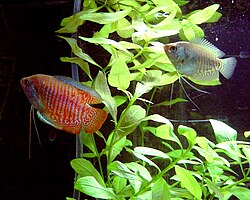
Cloudy eyes in Dwarf Gouramis, caused by various infections or poor water quality, can lead to severe vision loss and even death if not treated promptly. It's crucial for owners to understand the urgency of addressing this issue and the importance of maintaining optimal water parameters for their fish.
Dwarf Gourami Cloudy Eyes: Common Causes
Poor Water Quality
Most LikelyHigh levels of ammonia, nitrite, or nitrate can irritate the eyes, leading to cloudiness.
Bacterial Infection
Most LikelyGram-negative bacteria, such as Aeromonas, can cause eye infections in Dwarf Gouramis.
Parasitic Infection
PossibleIchthyophthirius multifiliis, commonly known as ich, can infect the eyes and cause cloudiness.
Fungal Infection
PossibleSaprolegnia or Oödinium can lead to eye infections if the fish is stressed or has a weakened immune system.
Nutritional Deficiencies
Less CommonLack of essential nutrients, particularly vitamin A, can contribute to eye cloudiness.
How to Diagnose the Cause
Follow these steps in order. Stop when you identify a likely cause and move to treatment.
- Observe the fish's behavior and appearance for other signs of illness.
Check for signs of stress, loss of appetite, or other physical symptoms.
- Test the water parameters for ammonia, nitrite, nitrate, pH, and hardness.
Use a water test kit to ensure the water quality is within the optimal range for Dwarf Gouramis.
Recommended: Water test kit - Inspect the fish's eyes for any visible signs of infection or parasites.
Look for redness, swelling, or discharge.
- Consider the fish's recent diet and environment changes.
Changes in diet or environment can stress the fish and weaken their immune system.
- Consult with a veterinarian experienced with fish health for a definitive diagnosis.
A vet can provide a more accurate diagnosis and treatment plan.
How to Treat Dwarf Gourami Cloudy Eyes
- Improve water quality by changing 25-30% of the water daily.
Ensure the new water is treated with a dechlorinator and has the same temperature and pH as the tank water.
- Administer an appropriate antibiotic or antiparasitic medication as directed by a veterinarian.
Follow the vet's instructions carefully for dosage and duration of treatment.
- Ensure the fish is receiving a balanced diet rich in vitamins and minerals.
Feeding a varied diet, including high-quality flake food and live or frozen foods, can support recovery.
- Remove any stressors from the tank, such as aggressive tankmates or poor water quality.
A stress-free environment is essential for healing.
- Monitor the fish closely for signs of improvement or worsening of the condition.
Prompt action is necessary if the condition does not improve within a few days of treatment.
How to Prevent Dwarf Gourami Cloudy Eyes
When to See a Vet
🔬 AI Symptom Checker
Not sure what's wrong? Describe your fish's symptoms to the FishCare AI and get an instant diagnosis.
Check Symptoms →Frequently Asked Questions
This guide was reviewed for biological accuracy and practical aquarium care guidance. Always test water parameters before treating a sick fish — poor water quality is the most common root cause. Consult an aquatic veterinarian if symptoms persist after 48 hours of correct treatment.
Sources: Merck Veterinary Manual — Aquarium Fishes · UF/IFAS Extension — Fish Health Management