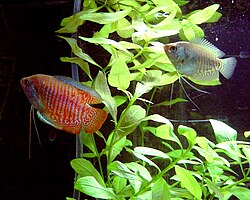
Bloated or swollen Dwarf Gouramis can be a critical sign of internal health issues, often requiring immediate attention. This condition can be caused by various factors, including internal parasites, bacterial infections, or poor water quality. It is crucial for owners to understand the urgency and take prompt action to prevent further complications.
Dwarf Gourami Bloated or Swollen: Common Causes
Internal Parasites
Most LikelyParasites like tapeworms can cause bloating due to their presence in the fish's intestines.
Bacterial Infections
Most LikelyBacteria such as Aeromonas or Columnaris can lead to internal swelling and other health issues.
Poor Water Quality
PossibleAmmonia, nitrite, or nitrate levels that are too high can cause stress and lead to bloating.
Overfeeding
PossibleExcess food can lead to bloating and may be a contributing factor if the diet is not balanced.
Gastric Bloat
Less CommonThis is a less common condition where the stomach fills with gas, often due to a dietary issue.
How to Diagnose the Cause
Follow these steps in order. Stop when you identify a likely cause and move to treatment.
- Observe the fish's behavior and appearance for any other signs of illness such as loss of appetite, clamped fins, or cloudiness of the eyes.
This can help identify if the bloating is part of a larger health issue.
- Check the water parameters for ammonia, nitrite, and nitrate levels using a test kit.
High levels of these can indicate stress and contribute to bloating.
Recommended: Water test kit - Inspect the fish for any external parasites or signs of injury that might be causing the bloating.
This can be done with a magnifying glass or by gently lifting the fish out of the water.
Recommended: Magnifying glass - Examine the fish's stomach for signs of bloating or distension.
This can sometimes be done by gently pressing on the abdomen with a clean finger.
- Consider the fish's diet and feeding habits to rule out overfeeding as a cause.
Dwarf Gouramis should be fed small amounts several times a day, not left to graze.
How to Treat Dwarf Gourami Bloated or Swollen
- If water quality is the issue, immediately improve the water parameters to the recommended levels for Dwarf Gouramis (25.0–28.0°C, pH 6.0–7.5).
- Perform a 50% water change daily to remove toxins and reduce stress on the fish.
- Administer an anti-parasitic treatment as recommended by a veterinarian, such as metronidazole or praziquantel, if internal parasites are suspected.
- Treat bacterial infections with appropriate antibiotics, such as tetracycline, under veterinary supervision.
- Adjust the diet to ensure it is balanced and not overfeeding the fish, possibly including a fasting period for a few days if necessary.
How to Prevent Dwarf Gourami Bloated or Swollen
When to See a Vet
🔬 AI Symptom Checker
Not sure what's wrong? Describe your fish's symptoms to the FishCare AI and get an instant diagnosis.
Check Symptoms →Frequently Asked Questions
This guide was reviewed for biological accuracy and practical aquarium care guidance. Always test water parameters before treating a sick fish — poor water quality is the most common root cause. Consult an aquatic veterinarian if symptoms persist after 48 hours of correct treatment.
Sources: Merck Veterinary Manual — Aquarium Fishes · UF/IFAS Extension — Fish Health Management