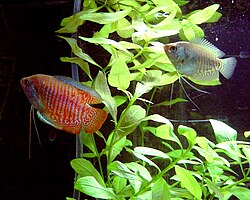
Suddenly aggressive behavior in Dwarf Gouramis can stem from territorial disputes, stress, or a change in their social structure. It's a moderate concern that requires careful observation and intervention. Owners should first ensure their fish's environment is stable and stress-free.
Dwarf Gourami Aggressive: Common Causes
Territorial disputes
Most LikelyDwarf Gouramis are territorial and may become aggressive when they perceive a threat to their territory or nesting area.
Stress
PossibleStress can be caused by water quality issues, sudden changes in the environment, or overcrowding.
Change in social structure
PossibleAdding new fish or changes in the tank's layout can disrupt the established social order and lead to aggression.
Sexual aggression
Less CommonDuring the breeding season, male Dwarf Gouramis may display more aggressive behavior.
Health issues
Less CommonUnderlying health problems can also lead to aggression, so it's important to rule these out.
How to Diagnose the Cause
Follow these steps in order. Stop when you identify a likely cause and move to treatment.
- Observe the fish's behavior in different tank conditions
Check if the aggression is consistent or triggered by specific events.
- Check water quality parameters
Ensure the pH, temperature, and ammonia/nitrite/nitrate levels are within the Dwarf Gourami's optimal range.
Recommended: pH test kit - Inspect the tank for overcrowding or poor tank maintenance
Dwarf Gouramis thrive in a well-maintained, spacious tank with plenty of swimming space.
- Assess the presence of new fish or changes in the tank
Identify if recent additions or rearrangements have triggered the aggression.
- Consider the breeding season
Determine if the aggression is due to the breeding season, especially if only males are involved.
How to Treat Dwarf Gourami Aggressive
- Improve water quality
Perform regular water changes and maintain optimal pH and temperature levels.
- Provide more space
Ensure the tank is adequately sized and there are hiding spots for the fish to retreat to.
- Remove any new fish or rearrange the tank
If the aggression is due to a new addition or rearrangement, remove the cause and observe the fish's behavior.
- Separate aggressive fish
If aggression is directed at a specific fish, consider temporarily separating them to allow for cooling off and reduce stress.
- Monitor diet and stress levels
Ensure the fish is receiving a balanced diet and minimize stressors in the tank environment.
How to Prevent Dwarf Gourami Aggressive
When to See a Vet
🔬 AI Symptom Checker
Not sure what's wrong? Describe your fish's symptoms to the FishCare AI and get an instant diagnosis.
Check Symptoms →Frequently Asked Questions
This guide was reviewed for biological accuracy and practical aquarium care guidance. Always test water parameters before treating a sick fish — poor water quality is the most common root cause. Consult an aquatic veterinarian if symptoms persist after 48 hours of correct treatment.
Sources: Merck Veterinary Manual — Aquarium Fishes · UF/IFAS Extension — Fish Health Management