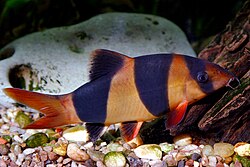
Torn or ragged fins in Clown Loaches can indicate stress, poor water quality, or diet issues. It is important to rule out external injuries as they are rare in this peaceful species. This condition is usually not life-threatening but can be a sign of underlying health issues. Owners should be vigilant about water parameters and diet to prevent recurrence.
Clown Loach Torn Fins: Common Causes
Poor Water Quality
Most LikelyAmmonia, nitrite, and nitrate levels exceeding recommended thresholds can stress the fish, leading to fin damage.
Inadequate Diet
PossibleInsufficient vitamins, particularly vitamin C and B12, can cause fin deterioration in Clown Loaches.
Water Temperature Fluctuations
PossibleSudden temperature changes can cause stress and weaken the fish's fins, making them more susceptible to damage.
Poor Tank Mates
PossibleAggressive tank mates can cause physical harm to the Clown Loach, resulting in torn fins.
Parasites
Less CommonExternal parasites, such as ich, can cause fin damage in Clown Loaches.
How to Diagnose the Cause
Follow these steps in order. Stop when you identify a likely cause and move to treatment.
- Check the water parameters
Measure ammonia, nitrite, nitrate, pH, and temperature using an aquarium test kit.
Recommended: Aquarium test kit - Observe the fish's behavior
Look for signs of stress or aggression, as these can be indicators of physical harm or poor tank conditions.
- Inspect the tank environment
Ensure the tank has hiding spots for the fish to reduce stress and adequate space for swimming.
- Evaluate the diet
Assess if the fish's diet is balanced and includes a variety of high-quality foods.
- Check for external parasites
Use a magnifying glass to inspect the fish for signs of parasites like ich or Velvet Disease.
Recommended: Magnifying glass
How to Treat Clown Loach Torn Fins
- Improve water quality
Perform water changes as needed to keep ammonia, nitrite, and nitrate levels within safe ranges. Use a water conditioner if chlorine is present.
- Adjust the diet
Ensure the fish receives a balanced diet with adequate vitamin and mineral supplements. Consider adding vitamin C to the water.
- Control temperature
Maintain the tank at a stable temperature of 25.0–30.0°C and avoid rapid changes.
- Remove aggressive tank mates
If aggression is an issue, consider separating the fish or using a different tank for aggressive species.
- Treat for parasites
If parasites are detected, treat the fish with appropriate medication, following the manufacturer's instructions.
How to Prevent Clown Loach Torn Fins
When to See a Vet
🔬 AI Symptom Checker
Not sure what's wrong? Describe your fish's symptoms to the FishCare AI and get an instant diagnosis.
Check Symptoms →Frequently Asked Questions
This guide was reviewed for biological accuracy and practical aquarium care guidance. Always test water parameters before treating a sick fish — poor water quality is the most common root cause. Consult an aquatic veterinarian if symptoms persist after 48 hours of correct treatment.
Sources: Merck Veterinary Manual — Aquarium Fishes · UF/IFAS Extension — Fish Health Management