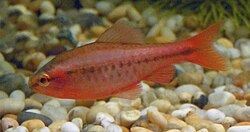
Swimming sideways in Cherry Barbs is a serious issue often indicating a health crisis. It can be due to a variety of factors, including parasites, infections, or poor water quality. Immediate attention is crucial to prevent further complications and potential death. Owners should first assess the tank conditions and observe for other signs of illness.
Cherry Barb Swimming Sideways: Common Causes
External Parasites
Most LikelyInfestations like ich or flukes can cause fish to swim sideways.
Internal Parasites
PossibleInternal parasites can lead to malnutrition and weakness, causing swimming difficulties.
Bacterial Infections
Most LikelyInfections like Columnaris can cause swimming abnormalities and is highly contagious.
Poor Water Quality
Most LikelyHigh ammonia or nitrite levels can stress fish and lead to swimming issues.
Metabolic Disorders
PossibleConditions like dropsy or swim bladder issues can cause swimming abnormalities.
How to Diagnose the Cause
Follow these steps in order. Stop when you identify a likely cause and move to treatment.
- Observe the fish's behavior and appearance for other signs of illness.
Look for signs like fin damage, bloating, or loss of appetite.
- Check the water parameters for ammonia, nitrite, and nitrate levels.
Use a water test kit to ensure the tank conditions are within the Cherry Barb's optimal range.
Recommended: Water test kit - Inspect the tank for signs of parasites or bacteria.
Look for ich spots, cloudy eyes, or unusual spots on the fish's body.
- Consider the fish's diet and recent changes to it.
Ensure the diet is balanced and not too rich in protein, which can lead to swim bladder issues.
- Check for signs of internal health issues by performing a physical examination.
This may require a syringe and a magnifying glass to examine the fish's gills and belly.
Recommended: Syringe, magnifying glass
How to Treat Cherry Barb Swimming Sideways
- Disinfect the tank and replace 50% of the water with fresh, dechlorinated water daily.
This helps to lower ammonia and nitrite levels and remove pathogens.
- Administer appropriate medication based on the diagnosis.
Use medications like metronidazole or praziquantel for internal parasites, and formalin or malachite green for external parasites.
- Feed a balanced diet rich in vitamins and minerals.
This can support the fish's immune system and aid recovery.
- Ensure the tank temperature remains stable within the optimal range of 23–27°C.
Temperature fluctuations can stress the fish and worsen symptoms.
- Isolate the affected fish to prevent the spread of disease to other tank inhabitants.
This is crucial for preventing further infections and maintaining the health of the entire tank community.
How to Prevent Cherry Barb Swimming Sideways
When to See a Vet
🔬 AI Symptom Checker
Not sure what's wrong? Describe your fish's symptoms to the FishCare AI and get an instant diagnosis.
Check Symptoms →Frequently Asked Questions
This guide was reviewed for biological accuracy and practical aquarium care guidance. Always test water parameters before treating a sick fish — poor water quality is the most common root cause. Consult an aquatic veterinarian if symptoms persist after 48 hours of correct treatment.
Sources: Merck Veterinary Manual — Aquarium Fishes · UF/IFAS Extension — Fish Health Management