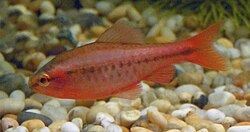
Sunken belly in Cherry Barbs, Puntius titteya, is a critical condition indicating malnutrition, internal parasites, or infections. It's an urgent issue that can lead to death if not addressed promptly. Owners should first ensure a stable environment and regular feeding routines.
Cherry Barb Sunken Belly: Common Causes
Malnutrition
Most LikelyInadequate diet or overfeeding can lead to nutrient deficiencies.
Internal Parasites
Most LikelyParasites like tapeworms or flukes can cause internal damage and weight loss.
Infections
PossibleBacterial or fungal infections can lead to systemic illness and weight loss.
Stress
PossibleStress from tank mates, water quality issues, or environmental changes can suppress appetite.
Disease
Less CommonConditions like dropsy or swim bladder disorders can mimic sunken belly symptoms.
How to Diagnose the Cause
Follow these steps in order. Stop when you identify a likely cause and move to treatment.
- Observe fish for other symptoms like bloating, clamped fins, or lethargy.
These can indicate the underlying cause.
- Check water parameters for ammonia, nitrite, and nitrate levels.
Poor water quality can exacerbate symptoms.
Recommended: Water test kit - Inspect the fish for external parasites or signs of injury.
This can help identify if parasites are the cause.
Recommended: Magnifying glass - Perform a fecal float to check for internal parasites.
This is a non-invasive way to detect parasites.
Recommended: Fecal float kit - Consider the fish's diet and feeding habits.
Ensure a balanced diet is being provided.
How to Treat Cherry Barb Sunken Belly
- Improve water quality by performing regular water changes and maintaining optimal parameters.
This can help alleviate stress and support healing.
- Feed a balanced diet with high-quality flakes or pellets, and consider adding live or frozen foods for variety.
Ensure the fish is getting all necessary nutrients.
- Administer anti-parasitic medication as prescribed by a vet, if internal parasites are present.
Follow the vet's instructions carefully.
- Treat bacterial or fungal infections with appropriate antibiotics or antifungals, under veterinary supervision.
Do not self-medicate as this can worsen the condition.
- Provide stress relief by ensuring adequate space, reducing aggression from tank mates, and maintaining a stable environment.
Stress can exacerbate symptoms and hinder recovery.
How to Prevent Cherry Barb Sunken Belly
When to See a Vet
🔬 AI Symptom Checker
Not sure what's wrong? Describe your fish's symptoms to the FishCare AI and get an instant diagnosis.
Check Symptoms →Frequently Asked Questions
This guide was reviewed for biological accuracy and practical aquarium care guidance. Always test water parameters before treating a sick fish — poor water quality is the most common root cause. Consult an aquatic veterinarian if symptoms persist after 48 hours of correct treatment.
Sources: Merck Veterinary Manual — Aquarium Fishes · UF/IFAS Extension — Fish Health Management