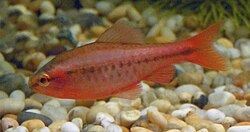
Sinking to the bottom in Cherry Barbs is often a sign of a serious health issue, indicating stress or illness. This behavior can be urgent and requires immediate attention. Owners should consider the fish's diet, water quality, and recent changes to the tank environment.
Cherry Barb Sinking to Bottom: Common Causes
Poor Water Quality
Most LikelyHigh ammonia or nitrite levels can cause stress and lead to this behavior.
Digestive Issues
PossibleIngestion of uneaten food or poor diet can cause stomach problems and lead to sinking.
Stress
PossibleChanges in tank conditions, such as new tankmates or water temperature fluctuations, can stress Cherry Barbs and cause them to sink.
Infection
PossibleBacterial or parasitic infections can weaken the fish and make it difficult to swim.
Old Age
Less CommonSenior Cherry Barbs may experience age-related health issues that can cause them to sink to the bottom.
How to Diagnose the Cause
Follow these steps in order. Stop when you identify a likely cause and move to treatment.
- Check the water parameters for ammonia, nitrite, and nitrate levels using a test kit.
Ensure the water is within the Cherry Barb's optimal range of 6.0–8.0 pH and 23–27°C.
Recommended: Water test kit - Inspect the fish for signs of external parasites or internal bloating.
Look for any visible abnormalities on the fish's body or in its behavior.
- Observe the fish's diet and feeding habits.
Ensure the fish is not overeating or consuming inappropriate food.
- Check for signs of aggression or bullying from tankmates.
If the fish is being bullied, consider introducing a larger tank or rearranging the tank layout.
- Monitor the fish's swimming patterns and behavior over time.
Note if the sinking is persistent or if the fish shows any signs of improvement.
How to Treat Cherry Barb Sinking to Bottom
- Improve water quality by changing 25% of the tank water every 2–3 days.
Use dechlorinated water to avoid further stress.
- Adjust the diet to include easily digestible foods, such as finely chopped vegetables or specialized fish food for delicate stomachs.
Avoid overfeeding and remove uneaten food after feeding.
- Provide a stress-free environment by reducing tank decor and minimizing disturbances in the tank.
Ensure tankmates are compatible and not aggressive towards the Cherry Barb.
- Administer appropriate medications if an infection is suspected, following the vet's instructions.
Never use harsh chemicals or medications without consulting a professional.
- Regularly monitor the fish's health and progress, and adjust the treatment plan as needed.
Keep detailed notes on the fish's behavior and any changes observed during treatment.
How to Prevent Cherry Barb Sinking to Bottom
When to See a Vet
🔬 AI Symptom Checker
Not sure what's wrong? Describe your fish's symptoms to the FishCare AI and get an instant diagnosis.
Check Symptoms →Frequently Asked Questions
This guide was reviewed for biological accuracy and practical aquarium care guidance. Always test water parameters before treating a sick fish — poor water quality is the most common root cause. Consult an aquatic veterinarian if symptoms persist after 48 hours of correct treatment.
Sources: Merck Veterinary Manual — Aquarium Fishes · UF/IFAS Extension — Fish Health Management