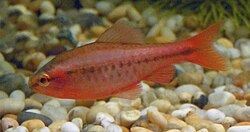
Cherry Barbs, known for their vibrant colors, may exhibit pale or faded colors due to stress, poor water quality, or nutritional deficiencies. This is generally not a life-threatening issue, but it's crucial for owners to identify the underlying cause promptly. Monitoring the fish's behavior and water conditions is the first step in addressing this concern.
Cherry Barb Pale Color: Common Causes
Poor Water Quality
Most LikelyHigh ammonia or nitrite levels can stress the fish and lead to color loss.
Nutritional Deficiencies
PossibleInadequate diet, particularly lack of color-enhancing foods, can cause fading colors.
Stress
PossibleStress from overcrowding, tankmates, or rapid temperature changes can lead to color loss.
Poor Health
PossibleDiseases such as ich or fin rot can cause color loss, along with other symptoms.
Genetic Factors
Less CommonNatural variations in coloration can occur, though this is rare in healthy Cherry Barbs.
How to Diagnose the Cause
Follow these steps in order. Stop when you identify a likely cause and move to treatment.
- Perform a water test
Check ammonia, nitrite, and nitrate levels. Ensure pH and temperature are within the optimal range for Cherry Barbs.
Recommended: test kit - Observe behavior and appearance
Look for signs of disease such as spots, lesions, or abnormal fin shapes.
- Evaluate diet
Assess the fish's diet for variety and adequacy, including color-enhancing foods.
- Consider tank conditions
Inspect the tank for stressors like overcrowding or aggressive tankmates.
- Monitor for improvement
After making changes, monitor the fish's response over several days to weeks.
How to Treat Cherry Barb Pale Color
- Improve water quality
Regularly change water, add water conditioners if necessary, and consider using an ammonia binder if levels are high.
- Adjust diet
Feeding a balanced diet with color-enhancing foods like brine shrimp or high-quality flakes can help restore coloration.
- Reduce stress
Ensure the tank is well-maintained with adequate space and compatible tankmates. Avoid rapid temperature changes.
- Treat for disease
If signs of disease are present, consult a veterinarian for appropriate treatment.
- Regular maintenance
Continue with regular water changes and monitoring to prevent recurrence of the problem.
How to Prevent Cherry Barb Pale Color
When to See a Vet
🔬 AI Symptom Checker
Not sure what's wrong? Describe your fish's symptoms to the FishCare AI and get an instant diagnosis.
Check Symptoms →Frequently Asked Questions
This guide was reviewed for biological accuracy and practical aquarium care guidance. Always test water parameters before treating a sick fish — poor water quality is the most common root cause. Consult an aquatic veterinarian if symptoms persist after 48 hours of correct treatment.
Sources: Merck Veterinary Manual — Aquarium Fishes · UF/IFAS Extension — Fish Health Management