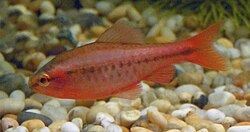
Cherry Barbs, known for their vibrant coloration and peaceful nature, may refuse food due to stress or illness. This issue can be serious if not addressed promptly, as it can lead to further health complications. Before diving into solutions, consider the fish's water parameters and diet.
Cherry Barb Not Eating: Common Causes
Stress
Most LikelyEnvironmental changes, tank mates, or water quality issues can stress Cherry Barbs, leading to a loss of appetite.
Illness
Most LikelyCommon fish diseases like ich, fin rot, or dropsy can cause discomfort and appetite loss in Cherry Barbs.
Poor Diet
PossibleInadequate nutrition or feeding inappropriate foods can also result in a lack of interest in food.
Reproductive Cycle
PossibleFemale Cherry Barbs may stop eating during their reproductive cycle.
Age
Less CommonOlder Cherry Barbs may naturally eat less, which can be normal as they age.
How to Diagnose the Cause
Follow these steps in order. Stop when you identify a likely cause and move to treatment.
- Check the water parameters
Ensure the tank's temperature, pH, and ammonia levels are within the optimal range for Cherry Barbs.
Recommended: pH test kit, thermometer - Observe fish behavior
Look for signs of illness, such as clamped fins, bloating, or loss of coloration.
- Inspect the tank environment
Check for any visible stressors, like aggressive tank mates or dirty water.
- Review feeding habits
Consider the frequency and type of food provided, ensuring it is suitable for Cherry Barbs.
- Consult with other fish owners
Gather insights from fellow hobbyists who may have experienced similar issues.
How to Treat Cherry Barb Not Eating
- Stabilize water parameters
Adjust the tank's temperature, pH, and ammonia levels to within the optimal range for Cherry Barbs.
- Improve water quality
Perform regular water changes and maintain clean tank conditions.
- Adjust feeding routine
Try smaller, more frequent feedings with a varied diet that includes live or frozen foods.
- Provide hiding spots
Add plants or decor to create hiding spots to reduce stress in the tank.
- Seek veterinary care
If the fish is not eating for more than a week, consult a vet for further examination and treatment.
How to Prevent Cherry Barb Not Eating
When to See a Vet
🔬 AI Symptom Checker
Not sure what's wrong? Describe your fish's symptoms to the FishCare AI and get an instant diagnosis.
Check Symptoms →Frequently Asked Questions
This guide was reviewed for biological accuracy and practical aquarium care guidance. Always test water parameters before treating a sick fish — poor water quality is the most common root cause. Consult an aquatic veterinarian if symptoms persist after 48 hours of correct treatment.
Sources: Merck Veterinary Manual — Aquarium Fishes · UF/IFAS Extension — Fish Health Management