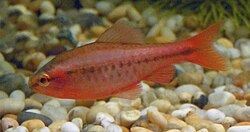
Darting or flashing in Cherry Barbs, Puntius titteya, often indicates stress or discomfort from external irritants. This behavior can be serious if not addressed promptly. Owners should first ensure stable water parameters and tank conditions are optimal.
Cherry Barb Darting or Flashing: Common Causes
Poor Water Quality
Most LikelyHigh ammonia or nitrite levels can cause stress and erratic behavior.
Poor Water Conditions
Most LikelyCherry Barbs prefer stable pH and temperature ranges; fluctuations can lead to darting.
Tank Mates
PossibleAggressive tank mates can cause stress, leading to darting as a self-defense mechanism.
Inadequate Tank Size
PossibleLimited space can make Cherry Barbs feel threatened and dart around more.
External Irritants
Less CommonPhysical objects in the tank, such as sharp edges or debris, can cause irritation.
How to Diagnose the Cause
Follow these steps in order. Stop when you identify a likely cause and move to treatment.
- Check water parameters for ammonia, nitrite, and nitrate using a test kit.
Ensure they are within optimal levels for Cherry Barbs.
Recommended: Water test kit - Inspect the tank for any physical objects or sharp edges that may cause irritation.
Remove any debris or sharp objects that could harm the fish.
- Observe tank mates and their behavior to rule out aggression.
Ensure there is no bullying or aggressive behavior among the fish.
- Assess tank size and whether it provides enough swimming space.
Ensure the tank is adequately sized for the number of fish.
- Monitor the diet to ensure it is balanced and suitable for Cherry Barbs.
Aim for a varied diet including high-quality flakes and live foods.
How to Treat Cherry Barb Darting or Flashing
- Perform a water change of 20-30% to improve water quality.
This helps remove toxins and maintain a healthy environment.
- Remove any aggressive tank mates or adjust the tank layout to reduce stress.
Creating a peaceful environment is crucial for recovery.
- Provide hiding spots or plants to make the tank feel more secure.
This can help the fish feel less threatened and more relaxed.
- Monitor diet and consider adding supplements to support the fish's immune system.
A healthy diet can help the fish fight off stress and irritants.
- Continue to monitor water quality and behavior to ensure improvement.
Regular checks are necessary to maintain health and prevent recurrence.
How to Prevent Cherry Barb Darting or Flashing
When to See a Vet
🔬 AI Symptom Checker
Not sure what's wrong? Describe your fish's symptoms to the FishCare AI and get an instant diagnosis.
Check Symptoms →Frequently Asked Questions
This guide was reviewed for biological accuracy and practical aquarium care guidance. Always test water parameters before treating a sick fish — poor water quality is the most common root cause. Consult an aquatic veterinarian if symptoms persist after 48 hours of correct treatment.
Sources: Merck Veterinary Manual — Aquarium Fishes · UF/IFAS Extension — Fish Health Management