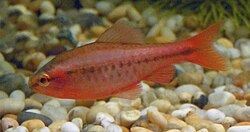
Black spots on Cherry Barbs are often a sign of ich or fungal infections, which can be serious if not addressed promptly. These spots can lead to secondary infections and stress, impacting the fish's health and appearance. As a beginner-friendly fish, early detection and treatment are crucial for their recovery.
Cherry Barb Black Spots: Common Causes
Ich (Ichthyophthirius multifiliis)
Most LikelyA highly contagious protozoan that causes white spots before turning black.
Fungal Infections
Most LikelyCaused by various fungi, leading to black spots and sloughing skin.
Poor Water Quality
PossibleHigh ammonia or nitrite levels can stress the fish, making them more susceptible to infections.
Inadequate Diet
PossibleLack of proper nutrition can weaken the fish's immune system, increasing the risk of infections.
Physical Trauma
Less CommonMinor injuries can become entry points for infections, resulting in black spots.
How to Diagnose the Cause
Follow these steps in order. Stop when you identify a likely cause and move to treatment.
- Observe the fish for any signs of stress or abnormal behavior.
Look for scratching, gasping at the surface, or clamped fins.
- Inspect the fish's body and fins for black spots or lesions.
Use a magnifying glass if necessary to see spots clearly.
Recommended: magnifying glass - Check the water parameters for ammonia, nitrite, and nitrate levels.
High ammonia or nitrite can indicate poor water quality.
Recommended: water test kit - Consider the fish's environment and recent changes, such as new tankmates or water changes.
Changes can stress the fish and lead to infections.
- Examine the diet and ensure it's balanced and appropriate for Cherry Barbs.
Lack of variety can weaken the immune system.
How to Treat Cherry Barb Black Spots
- Perform a 25% water change to reduce ammonia and nitrite levels.
Use dechlorinated water to avoid further stress.
- Increase the temperature to 28°C to help control the ich protozoan, if applicable.
This is not suitable for all infections, so proceed with caution.
- Add an antiparasitic or antifungal treatment to the tank as recommended by a vet.
Follow the dosage instructions carefully.
- Separate the affected fish from the tank to prevent the spread of the infection.
This is especially important for ich, which is highly contagious.
- Monitor the fish closely and repeat water changes and treatments as necessary.
Continue until all signs of infection are gone and the fish is healthy again.
How to Prevent Cherry Barb Black Spots
When to See a Vet
🔬 AI Symptom Checker
Not sure what's wrong? Describe your fish's symptoms to the FishCare AI and get an instant diagnosis.
Check Symptoms →Frequently Asked Questions
This guide was reviewed for biological accuracy and practical aquarium care guidance. Always test water parameters before treating a sick fish — poor water quality is the most common root cause. Consult an aquatic veterinarian if symptoms persist after 48 hours of correct treatment.
Sources: Merck Veterinary Manual — Aquarium Fishes · UF/IFAS Extension — Fish Health Management