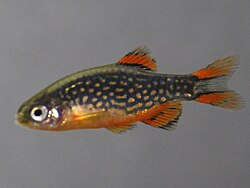
Spots on fins in Celestial Pearl Danios are often a sign of parasitic infections or poor water quality, which can be serious and lead to secondary infections. Immediate attention is crucial to prevent further health issues. Owners should first ensure a stable environment and proper diet.
Celestial Pearl Danio Spots on Fins: Common Causes
Ichthyophthirius multifiliis (Ich)
Most LikelyCommonly known as ich, this is a highly contagious protozoan that causes spots on fins and scales.
Bacterial Infections
PossiblePoor water quality or stress can lead to bacterial infections, which often present as spots on the fins.
External Parasites
PossibleParasites like anchor worms or velvet can cause spots on the fins, often accompanied by other symptoms like scratching or loss of appetite.
Poor Diet
Less CommonA diet lacking in essential nutrients can weaken the fish's immune system, making it more susceptible to infections.
Stress
Less CommonStress from tank mates, overcrowding, or rapid changes in water parameters can lead to spots on fins.
How to Diagnose the Cause
Follow these steps in order. Stop when you identify a likely cause and move to treatment.
- Observe the fish's behavior and appearance for other signs of illness, such as scratching or loss of appetite.
This will help determine if the spots are due to a parasitic infection, bacterial infection, or other factors.
- Check the water quality parameters, including ammonia, nitrite, nitrate, pH, and temperature.
Poor water quality can weaken the fish's immune system and lead to spots on fins.
Recommended: Water test kit - Inspect the tank for signs of external parasites, such as small white spots or worms on the fish's body.
This can help identify if the spots are caused by external parasites.
- Gently remove a small fin tissue sample for microscopic examination if necessary.
This can confirm the presence of parasites or bacteria.
Recommended: Microscope - Review the fish's diet and ensure it is balanced and meets the nutritional requirements of Celestial Pearl Danios.
A poor diet can weaken the fish's immune system and make it more susceptible to infections.
How to Treat Celestial Pearl Danio Spots on Fins
- Increase the water temperature to 28°C to help control the growth of Ichthyophthirius multifiliis.
This is a common treatment for ich, but it should be done carefully as it can stress the fish.
- Perform regular water changes to maintain good water quality and remove any parasites or bacteria.
Water changes should be done in small increments to avoid shocking the fish.
- Use an appropriate medication, such as metronidazole or malachite green, following the manufacturer's instructions.
These medications can help treat bacterial infections and external parasites.
- Ensure the fish is receiving a balanced diet rich in vitamins and minerals to support its immune system.
A healthy diet can help the fish fight off infections more effectively.
- Monitor the fish closely for any signs of improvement or worsening of the condition.
This will help determine the effectiveness of the treatment and whether further action is needed.
How to Prevent Celestial Pearl Danio Spots on Fins
When to See a Vet
🔬 AI Symptom Checker
Not sure what's wrong? Describe your fish's symptoms to the FishCare AI and get an instant diagnosis.
Check Symptoms →Frequently Asked Questions
This guide was reviewed for biological accuracy and practical aquarium care guidance. Always test water parameters before treating a sick fish — poor water quality is the most common root cause. Consult an aquatic veterinarian if symptoms persist after 48 hours of correct treatment.
Sources: Merck Veterinary Manual — Aquarium Fishes · UF/IFAS Extension — Fish Health Management