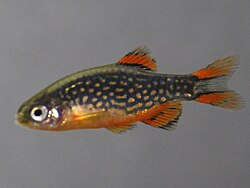
Cloudy Eyes in Celestial Pearl Danios is a serious condition caused by stress, poor water quality, or infections. It can lead to blindness and death if not treated promptly. Owners should first ensure water parameters are optimal and rule out other stressors before seeking professional help.
Celestial Pearl Danio Cloudy Eyes: Common Causes
Poor Water Quality
Most LikelyHigh ammonia or nitrite levels can cause stress and lead to Cloudy Eyes.
Infection
Most LikelyBacterial or parasitic infections can lead to Cloudy Eyes as the body's response to the infection.
Stress
PossibleStress from overcrowding, poor water conditions, or changes in water parameters can weaken the fish's immune system, making them susceptible to infections.
Dietary Issues
PossibleAn unbalanced diet or lack of vitamins and minerals can weaken the fish's immune system, contributing to Cloudy Eyes.
Genetic Factors
Less CommonIn some cases, Cloudy Eyes may be a genetic condition, although this is rare.
How to Diagnose the Cause
Follow these steps in order. Stop when you identify a likely cause and move to treatment.
- Check water parameters for ammonia, nitrite, and nitrate levels.
Use a test kit to ensure the water quality is within the optimal range for Celestial Pearl Danios.
Recommended: Water test kit - Inspect the fish for other signs of illness, such as ulcers or fin rot.
This can help identify if the Cloudy Eyes are a secondary symptom of another condition.
- Observe the fish's behavior and diet to assess for stress or dietary issues.
Stress or poor nutrition can exacerbate Cloudy Eyes.
- Perform a physical examination, including looking at the eyes under a magnifying glass.
This can help identify the cause of the Cloudy Eyes, such as infection or injury.
Recommended: Magnifying glass - Consult with a vet who specializes in fish health for a definitive diagnosis and treatment plan.
They can provide additional diagnostic tools and expertise.
How to Treat Celestial Pearl Danio Cloudy Eyes
- Improve water quality by increasing water changes and treating for ammonia and nitrite.
Use a water conditioner to neutralize chlorine and chloramine, and ensure pH and temperature are within the optimal range.
- Administer antibiotics or antiparasitic medications as prescribed by a vet.
Follow the vet's instructions carefully to avoid resistance and ensure the fish's safety.
- Provide a balanced diet rich in vitamins and minerals to support the fish's immune system.
Feeding high-quality pellets or flakes and offering live or frozen foods can be beneficial.
- Reduce stress by ensuring the tank is well-planted, providing hiding spots, and avoiding overcrowding.
Stress can weaken the fish's immune system and prolong recovery.
- Monitor the fish closely for signs of improvement or recurrence, and adjust treatment as needed.
Consistent care and observation are crucial for successful recovery.
How to Prevent Celestial Pearl Danio Cloudy Eyes
When to See a Vet
🔬 AI Symptom Checker
Not sure what's wrong? Describe your fish's symptoms to the FishCare AI and get an instant diagnosis.
Check Symptoms →Frequently Asked Questions
This guide was reviewed for biological accuracy and practical aquarium care guidance. Always test water parameters before treating a sick fish — poor water quality is the most common root cause. Consult an aquatic veterinarian if symptoms persist after 48 hours of correct treatment.
Sources: Merck Veterinary Manual — Aquarium Fishes · UF/IFAS Extension — Fish Health Management