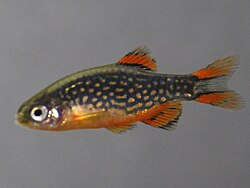
Bulging eyes in Celestial Pearl Danio, also known as Popeye, is a serious condition caused by stress, infection, or poor water quality. It can lead to blindness and even death if not addressed promptly. Owners must understand the critical need for immediate intervention.
Celestial Pearl Danio Bulging Eyes (Popeye): Common Causes
Poor Water Quality
Most LikelyAmmonia and nitrite levels exceeding 0.25 ppm can cause Popeye.
Infection
Most LikelyBacterial or parasitic infections, especially Costia, can lead to Popeye.
Stress
PossibleHigh water temperatures, aggression, or inadequate hiding spots can stress the fish, causing Popeye.
How to Diagnose the Cause
Follow these steps in order. Stop when you identify a likely cause and move to treatment.
- Perform a water test for ammonia, nitrite, nitrate, pH, and hardness.
Use a reliable test kit. Check the tank parameters against the ideal range for Celestial Pearl Danio.
Recommended: test kit - Inspect the fish for other signs of illness, such as scales sticking out, loss of appetite, or clamped fins.
Look for any additional symptoms that could indicate a secondary condition.
- Check the tank for overcrowding or aggression.
Assess if tank mates are bullying the affected fish or if there are insufficient hiding spots.
How to Treat Celestial Pearl Danio Bulging Eyes (Popeye)
- Improve water quality by increasing the flow, using an air stone, or changing 50% of the tank water daily.
This will help to reduce ammonia and nitrite levels.
- Treat with an antibiotic if an infection is present, following the instructions on the medication.
Ensure the medication is safe for Celestial Pearl Danio.
- Provide a stress-free environment with adequate hiding spots and remove any aggressive tank mates if necessary.
Ensure the tank is properly planted and decorated for optimal comfort and safety.
How to Prevent Celestial Pearl Danio Bulging Eyes (Popeye)
When to See a Vet
🔬 AI Symptom Checker
Not sure what's wrong? Describe your fish's symptoms to the FishCare AI and get an instant diagnosis.
Check Symptoms →Frequently Asked Questions
This guide was reviewed for biological accuracy and practical aquarium care guidance. Always test water parameters before treating a sick fish — poor water quality is the most common root cause. Consult an aquatic veterinarian if symptoms persist after 48 hours of correct treatment.
Sources: Merck Veterinary Manual — Aquarium Fishes · UF/IFAS Extension — Fish Health Management