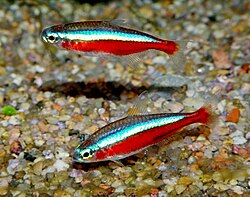
Excess mucus coating in Cardinal Tetras can be a sign of stress or infection, often indicating underlying health issues. This condition is serious and requires immediate attention. Owners should first check water parameters and diet, as these are critical for maintaining the fish's health.
Cardinal Tetra Mucus Coating: Common Causes
Poor Water Quality
Most LikelyHigh ammonia or nitrite levels can stress the fish, leading to an increased mucus production.
Inadequate Diet
PossibleA lack of variety or insufficient nutrient intake can weaken the fish's immune system, making it more susceptible to infections.
Water Temperature Fluctuations
PossibleSudden changes in water temperature can stress the fish, causing an excessive mucus production.
Bacterial Infections
Less CommonGram-negative bacteria can cause infections leading to mucus production, often due to poor water quality or weakened immune system.
Parasitic Infections
Less CommonParasites such as Ichthyophthirius multifiliis can cause mucus production as part of their life cycle.
How to Diagnose the Cause
Follow these steps in order. Stop when you identify a likely cause and move to treatment.
- Observe the fish's behavior and appearance in the tank.
Look for signs of stress, such as erratic swimming or loss of appetite.
- Check the water parameters for ammonia, nitrite, nitrate, pH, and temperature.
Use a test kit to ensure the water quality meets the Cardinal Tetra's requirements.
Recommended: Water test kit - Inspect the fish for any visible signs of injury or parasites.
Use a magnifying glass to check for external parasites or internal signs of infection.
Recommended: Magnifying glass - Review the fish's diet and feeding schedule.
Ensure the fish is receiving a balanced diet with a variety of foods.
- Consider the tank environment and recent changes.
Check for any recent changes in the tank, such as new decorations or fish introductions.
How to Treat Cardinal Tetra Mucus Coating
- Improve water quality by performing regular water changes and using water conditioners to neutralize ammonia and nitrite.
Change 25-30% of the water every 2-3 days.
- Adjust the water temperature to the optimal range of 23.0–27.0°C if it has been fluctuating.
Gradually acclimate the fish to the new temperature if necessary.
- Feed a varied diet that includes high-quality flake food, freeze-dried bloodworms, and live brine shrimp.
Ensure the fish is receiving a balanced and nutritious diet.
- If a bacterial infection is suspected, treat the tank with an appropriate antibiotic.
Follow the manufacturer's instructions for dosage and treatment duration.
- If a parasitic infection is suspected, treat the tank with an anti-parasitic medication.
Follow the manufacturer's instructions for dosage and treatment duration.
How to Prevent Cardinal Tetra Mucus Coating
When to See a Vet
🔬 AI Symptom Checker
Not sure what's wrong? Describe your fish's symptoms to the FishCare AI and get an instant diagnosis.
Check Symptoms →Frequently Asked Questions
This guide was reviewed for biological accuracy and practical aquarium care guidance. Always test water parameters before treating a sick fish — poor water quality is the most common root cause. Consult an aquatic veterinarian if symptoms persist after 48 hours of correct treatment.
Sources: Merck Veterinary Manual — Aquarium Fishes · UF/IFAS Extension — Fish Health Management