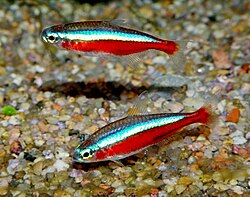
Clamped fins in Cardinal Tetras are a common sign of stress or discomfort, potentially leading to more severe health issues if not addressed promptly. Understanding the causes and early intervention can prevent complications. As a beginner-friendly species, monitoring their environment is crucial for their well-being.
Cardinal Tetra Clamped Fins: Common Causes
Poor Water Quality
Most LikelyHigh ammonia or nitrite levels can cause stress, leading to clamped fins.
Temperature Fluctuations
PossibleFluctuations outside the optimal range can stress the fish and affect fin shape.
Poor Diet
PossibleInadequate nutrition or overfeeding can result in nutritional imbalances that impact the fish's overall health, including their fins.
Physical Damage
PossibleBruises or injuries from tank aggression or debris can lead to fin clamping.
Water Parameters
Less CommonInappropriate pH or hardness levels can stress Cardinal Tetras, affecting their physical appearance.
How to Diagnose the Cause
Follow these steps in order. Stop when you identify a likely cause and move to treatment.
- Perform a full water test
Check for ammonia, nitrite, and nitrate levels.
Recommended: Water testing kit - Observe tank conditions
Look for signs of aggression, tank overcrowding, or inadequate cover.
- Assess the fish's diet
Ensure a varied diet that includes appropriate amounts of vegetables and protein sources.
- Inspect the fish for injuries
Search for signs of physical damage like cuts or nicks.
- Monitor water parameters
Check pH, hardness, and temperature levels.
How to Treat Cardinal Tetra Clamped Fins
- Improve water quality
Regular water changes and a clean tank are essential to maintain good water parameters.
- Stabilize tank temperature
Keep the temperature consistent within the optimal range.
- Adjust the diet
Feeding a balanced diet and avoiding overfeeding can help correct nutritional issues.
- Remove potential causes of stress
Remove aggressive tank mates, provide ample hiding spots, and reduce tank overcrowding.
- Use a medicated treatment if necessary
Consult with a vet to determine if a course of antibiotics or anti-parasitic treatment is needed.
How to Prevent Cardinal Tetra Clamped Fins
When to See a Vet
🔬 AI Symptom Checker
Not sure what's wrong? Describe your fish's symptoms to the FishCare AI and get an instant diagnosis.
Check Symptoms →Frequently Asked Questions
This guide was reviewed for biological accuracy and practical aquarium care guidance. Always test water parameters before treating a sick fish — poor water quality is the most common root cause. Consult an aquatic veterinarian if symptoms persist after 48 hours of correct treatment.
Sources: Merck Veterinary Manual — Aquarium Fishes · UF/IFAS Extension — Fish Health Management