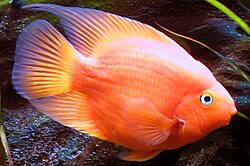
Spots on fins in Blood Parrot Cichlids are often a sign of ich or fin rot, serious conditions that can lead to systemic infections. These spots can indicate stress or poor water quality. Immediate attention is crucial to prevent further health complications.
Blood Parrot Cichlid Spots on Fins: Common Causes
Ich (Ichthyophthirius multifiliis)
Most LikelyA highly contagious protozoan that attacks the fish's gills and fins.
Fin Rot (Saprolegnia ferax)
Most LikelyA fungal infection that thrives in poor water conditions, causing spots and discoloration on the fins.
Stress
PossibleStress can weaken the fish's immune system, making it more susceptible to infections like ich or fin rot.
Poor Water Quality
PossibleHigh ammonia or nitrite levels can stress the fish and lead to secondary infections.
Inadequate Diet
Less CommonA lack of proper nutrition can weaken the fish's immune system, making it more prone to infections.
How to Diagnose the Cause
Follow these steps in order. Stop when you identify a likely cause and move to treatment.
- Inspect the fish for signs of other diseases such as flukes or dropsy.
This will help rule out other causes of spots on the fins.
- Check the water parameters for ammonia, nitrite, and nitrate levels.
Use a test kit to measure these parameters.
Recommended: Water test kit - Observe the fish's behavior and appetite to assess overall health.
Changes in behavior can indicate stress or pain.
- Examine the fin spots under a magnifying glass to identify the type of spot (e.g., white spots for ich, dark spots for fin rot).
This can help determine the most effective treatment.
Recommended: Magnifying glass - Take a water sample to a vet or aquatic pathologist for a professional diagnosis if needed.
This can confirm the presence of specific pathogens.
How to Treat Blood Parrot Cichlid Spots on Fins
- Increase the water flow to reduce stress and improve oxygenation.
This can help the fish cope with treatment and reduce the risk of secondary infections.
- Perform a 25-30% water change to remove harmful substances and improve water quality.
Use dechlorinated water and a water conditioner if necessary.
- Administer an appropriate medication as directed by a veterinarian, such as an ich treatment or antifungal medication.
Follow the dosage instructions carefully.
- Monitor the fish's response to treatment and adjust the treatment plan if necessary.
If the spots do not improve, seek veterinary advice for alternative treatments.
- Ensure the tank is well-maintained with regular water changes and proper filtration to prevent recurrence.
Maintaining good water quality is crucial for the long-term health of Blood Parrot Cichlids.
How to Prevent Blood Parrot Cichlid Spots on Fins
When to See a Vet
🔬 AI Symptom Checker
Not sure what's wrong? Describe your fish's symptoms to the FishCare AI and get an instant diagnosis.
Check Symptoms →Frequently Asked Questions
This guide was reviewed for biological accuracy and practical aquarium care guidance. Always test water parameters before treating a sick fish — poor water quality is the most common root cause. Consult an aquatic veterinarian if symptoms persist after 48 hours of correct treatment.
Sources: Merck Veterinary Manual — Aquarium Fishes · UF/IFAS Extension — Fish Health Management