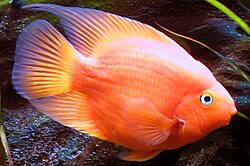
Sinking behavior in Blood Parrot Cichlids is a critical sign indicating a serious health issue. It can be indicative of internal disorders, swim bladder problems, or stress. Owners should act promptly, as this can lead to rapid deterioration and even death.
Blood Parrot Cichlid Sinking to Bottom: Common Causes
Internal Disorders
Most LikelyIssues like dropsy, swim bladder disorders, or internal tumors can cause sinking behavior.
Swim Bladder Problems
Most LikelyOverfeeding, incorrect feeding, or injury can lead to swim bladder dysfunction, making the fish unable to stay afloat.
Stress
PossibleStress due to poor water quality, aggression, or changes in the environment can also cause a Blood Parrot Cichlid to sink to the bottom.
Poor Water Quality
PossibleHigh ammonia or nitrite levels can lead to systemic problems that cause the fish to sink.
Disease
Less CommonInfections like Ich or bacterial infections can impair the fish's ability to swim properly.
How to Diagnose the Cause
Follow these steps in order. Stop when you identify a likely cause and move to treatment.
- Observe the fish's behavior and appearance closely
Look for signs of bloating, discoloration, or unusual posture.
- Test the water parameters
Check for ammonia, nitrite, and nitrate levels. pH and temperature should also be within the recommended range.
Recommended: Water test kit - Inspect the fish for external injuries
Look for any signs of physical damage or signs of fighting with tankmates.
- Examine the fish for bloating or distended belly
This can indicate internal health issues such as dropsy.
- Monitor the fish's feeding and digestion
Observe how the fish eats and if there is any regurgitation or changes in feces.
How to Treat Blood Parrot Cichlid Sinking to Bottom
- Improve water quality
Perform regular water changes and ensure the tank has good filtration to remove harmful substances.
- Adjust the diet
Feed a well-balanced diet with smaller, more frequent meals to prevent swim bladder issues.
- Administer medication
If an infection is present, follow the vet's instructions for medication. For internal disorders, consult a vet for specific treatment.
- Relieve stress
Ensure the tank is well-decorated and provide hiding spots to reduce stress from aggression or bullying by tankmates.
- Monitor the fish's response
Keep a close eye on the fish's recovery. If there is no improvement, seek veterinary assistance immediately.
How to Prevent Blood Parrot Cichlid Sinking to Bottom
When to See a Vet
🔬 AI Symptom Checker
Not sure what's wrong? Describe your fish's symptoms to the FishCare AI and get an instant diagnosis.
Check Symptoms →Frequently Asked Questions
This guide was reviewed for biological accuracy and practical aquarium care guidance. Always test water parameters before treating a sick fish — poor water quality is the most common root cause. Consult an aquatic veterinarian if symptoms persist after 48 hours of correct treatment.
Sources: Merck Veterinary Manual — Aquarium Fishes · UF/IFAS Extension — Fish Health Management