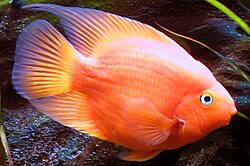
Not eating in Blood Parrot Cichlids is often a sign of stress or illness. This semi-aggressive fish can be sensitive to changes in their environment, diet, or health conditions, making timely intervention crucial. Understanding the root cause is essential for successful resolution.
Blood Parrot Cichlid Not Eating: Common Causes
Poor Diet
Most LikelyInsufficient or unbalanced nutrition can lead to disinterest in food.
Water Quality Issues
Most LikelyImpaired water parameters can stress the fish and cause feeding problems.
Stress
Most LikelyEnvironmental changes, tankmates, or crowding can cause stress that affects appetite.
Illness
PossibleHealth issues such as internal parasites, infections, or disease can suppress appetite.
Age or Health
Less CommonSenior fish or those with underlying health issues may show decreased appetite.
How to Diagnose the Cause
Follow these steps in order. Stop when you identify a likely cause and move to treatment.
- Inspect the fish for any signs of injury, fin damage, or discoloration.
This can indicate an underlying health issue.
- Check the water quality, including ammonia, nitrite, nitrate, pH, and temperature.
Ensure they are within the optimal range for Blood Parrot Cichlids.
Recommended: Water test kit - Observe the fish's behavior, looking for signs of stress or aggression.
Stressful interactions can affect eating habits.
- Examine the diet, ensuring it's balanced and suitable for Blood Parrot Cichlids.
Provide a varied diet including sinking pellets, live foods, and vegetables.
- If available, consult a veterinary record to review past health issues.
This can help identify potential ongoing health problems.
How to Treat Blood Parrot Cichlid Not Eating
- Improve water quality by changing water and addressing any imbalances.
Maintain the optimal water parameters for Blood Parrot Cichlids.
- Adjust the diet to include more palatable food options, and try hand-feeding if necessary.
Use sinking pellets and occasional live or frozen food.
- Create a stress-free environment by reducing tank noise, providing hiding spots, and ensuring proper tankmates.
This can help restore appetite in stressed fish.
- If signs of illness are present, consult a vet for a proper diagnosis and treatment.
This may include medication or other therapeutic measures.
- Monitor the fish's recovery closely and continue to maintain a healthy environment.
Gradually reintroduce the fish to the normal feeding schedule.
How to Prevent Blood Parrot Cichlid Not Eating
When to See a Vet
🔬 AI Symptom Checker
Not sure what's wrong? Describe your fish's symptoms to the FishCare AI and get an instant diagnosis.
Check Symptoms →Frequently Asked Questions
This guide was reviewed for biological accuracy and practical aquarium care guidance. Always test water parameters before treating a sick fish — poor water quality is the most common root cause. Consult an aquatic veterinarian if symptoms persist after 48 hours of correct treatment.
Sources: Merck Veterinary Manual — Aquarium Fishes · UF/IFAS Extension — Fish Health Management