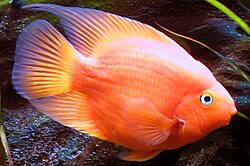
Fuzzy white growth on a Blood Parrot Cichlid is often a sign of a fungal infection, which can be severe and lead to systemic health issues. Immediate attention is crucial as it can spread rapidly. Owners should be aware of the potential for secondary infections and the importance of maintaining optimal water quality and stress-free conditions.
Blood Parrot Cichlid Fuzzy Growth: Common Causes
Poor Water Quality
Most LikelyHigh levels of ammonia, nitrite, or nitrate can stress the fish, compromising its immune system and making it susceptible to fungal infections.
Overcrowding
Most LikelyToo many fish in a small tank can lead to increased aggression and physical damage, which can then become an entry point for fungi.
Improper Diet
PossibleA diet lacking in variety or high in protein can lead to internal stress and poor health, making the fish more prone to infections.
Environmental Changes
PossibleSudden changes in water temperature, pH, or tank decor can stress the fish and weaken its immune system.
Poor Hygiene
Less CommonNot cleaning the tank regularly or using unsterilized equipment can introduce fungi into the tank environment.
How to Diagnose the Cause
Follow these steps in order. Stop when you identify a likely cause and move to treatment.
- Inspect the fish for the presence of cotton-like white or grey fungal growth on the body, mouth, or fins.
Observe the fish in a well-lit area to detect the growth.
- Check the water parameters for ammonia, nitrite, and nitrate levels.
Use a reliable test kit to measure these parameters.
Recommended: Water test kit - Evaluate the tank environment for signs of overcrowding, aggression, or recent changes.
Look for physical damage to the fish or tank decor.
- Assess the fish's diet for balance and variety.
Ensure the fish is receiving a diet appropriate for its nutritional needs.
- Review the tank maintenance schedule for consistency and cleanliness.
Ensure regular water changes and cleaning of the tank are being performed.
How to Treat Blood Parrot Cichlid Fuzzy Growth
- Improve water quality by performing frequent water changes (25-30% weekly).
Use dechlorinated water and test the water parameters regularly.
- Add an anti-fungal treatment to the tank, following the manufacturer's instructions.
Products like Miconazole or Kanamycin can be used.
- Remove any tankmates that may be causing stress or aggression to the affected fish.
Consider a temporary quarantine if necessary.
- Ensure the fish's diet is balanced and nutritious, possibly including probiotics to support gut health.
Avoid overfeeding and provide a variety of foods.
- Monitor the fish closely for signs of improvement or worsening of the condition.
Adjust treatment as needed based on the fish's response to the therapy.
How to Prevent Blood Parrot Cichlid Fuzzy Growth
When to See a Vet
🔬 AI Symptom Checker
Not sure what's wrong? Describe your fish's symptoms to the FishCare AI and get an instant diagnosis.
Check Symptoms →Frequently Asked Questions
This guide was reviewed for biological accuracy and practical aquarium care guidance. Always test water parameters before treating a sick fish — poor water quality is the most common root cause. Consult an aquatic veterinarian if symptoms persist after 48 hours of correct treatment.
Sources: Merck Veterinary Manual — Aquarium Fishes · UF/IFAS Extension — Fish Health Management