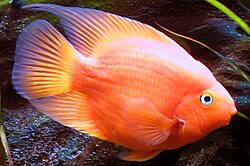
Floating at the surface in Blood Parrot Cichlids is a serious condition, often indicating a life-threatening emergency. It can be due to a variety of factors, ranging from poor water quality to health issues. Immediate attention is required to prevent fatal outcomes.
Blood Parrot Cichlid Floating at Surface: Common Causes
Poor Water Quality
Most LikelyHigh levels of ammonia, nitrites, or nitrates can cause stress and lead to the fish's inability to dive to a deeper, oxygen-rich layer of water.
constipation
Most LikelyThis can occur due to overfeeding, diet imbalances, or internal obstructions, making it difficult for the fish to dive and swim normally.
Gill Disease
PossibleParasitic infections, like Ichthyophthirius multifiliis, can impair gill function, making it hard for the fish to breathe and thus causing it to float at the surface.
Internal Issues
PossibleInternal parasites, infections, or tumors can also cause discomfort and inhibit normal swimming.
Overheating
Less CommonThe fish may be trying to escape higher water temperatures that can be detrimental to their health.
How to Diagnose the Cause
Follow these steps in order. Stop when you identify a likely cause and move to treatment.
- Inspect the water quality using a test kit.
Check for ammonia, nitrites, nitrates, and pH levels.
Recommended: Water quality test kit - Observe the fish's appearance for signs of disease, such as bloating, spots, or lesions.
These could indicate internal issues or external parasites.
- Use a magnifying glass to inspect the gills for signs of disease.
Gill infections or parasites can be detected through a thorough visual examination.
Recommended: Magnifying glass - Consider the recent diet changes and feeding frequency.
Overfeeding or inappropriate diet can lead to constipation.
- Monitor water temperature and ensure it falls within the recommended range of 24–28°C.
Abnormal temperatures can stress the fish and affect its ability to breathe normally.
Recommended: Thermometer
How to Treat Blood Parrot Cichlid Floating at Surface
- Improve water quality by performing a 25-30% water change to remove toxins and reduce ammonia, nitrites, and nitrates.
Ensure to acclimate the new water to the fish's tank temperature.
- Adjust the diet to promote digestion and prevent constipation. Feed high-fiber, high-quality foods in small, frequent portions.
Consider a veterinary recommended diet if necessary.
- Treat gill infections with an appropriate aquarium medication, following the manufacturer's instructions.
Do not treat the fish without knowing the exact cause.
- If internal parasites or tumors are suspected, consult with a veterinarian for proper treatment as these may require specialized medications or surgical intervention.
Do not administer any medication without professional advice.
- If the fish is overheating, reduce the water temperature gradually to the recommended range of 24–28°C.
Do not make rapid changes in water temperature.
How to Prevent Blood Parrot Cichlid Floating at Surface
When to See a Vet
🔬 AI Symptom Checker
Not sure what's wrong? Describe your fish's symptoms to the FishCare AI and get an instant diagnosis.
Check Symptoms →Frequently Asked Questions
This guide was reviewed for biological accuracy and practical aquarium care guidance. Always test water parameters before treating a sick fish — poor water quality is the most common root cause. Consult an aquatic veterinarian if symptoms persist after 48 hours of correct treatment.
Sources: Merck Veterinary Manual — Aquarium Fishes · UF/IFAS Extension — Fish Health Management