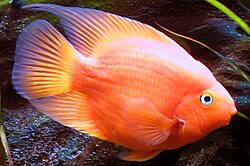
Fin rot in Blood Parrot Cichlids is a serious bacterial infection that can lead to severe health issues if not treated promptly. It typically occurs due to poor water quality, injuries, or stress, and can rapidly spread throughout the fish's body. Owners should be aware of the urgency to address this condition to prevent further complications.
Blood Parrot Cichlid Fin Rot: Common Causes
Poor Water Quality
Most LikelyHigh levels of ammonia or nitrite can weaken the fish's immune system, making it susceptible to fin rot.
Injuries
Most LikelyPhysical damage to the fins can create an entry point for bacteria, leading to fin rot.
Stress
PossibleStressful conditions, such as aggression from tank mates or rapid changes in water parameters, can weaken the fish's immune system and contribute to fin rot.
Unbalanced Diet
PossibleA diet lacking in necessary nutrients can weaken the fish's immune system, making it more prone to infections.
Poor Tank Maintenance
Less CommonNeglecting regular water changes and tank cleaning can lead to the buildup of harmful bacteria and contribute to fin rot.
How to Diagnose the Cause
Follow these steps in order. Stop when you identify a likely cause and move to treatment.
- Inspect the fish for signs of fin damage, discoloration, or ragged edges.
Look closely at the fins for any visible signs of deterioration.
- Check the water parameters for ammonia, nitrite, and nitrate levels.
Use a water test kit to measure these parameters.
Recommended: Water test kit - Observe the fish's behavior and overall health.
Look for signs of stress or other health issues that may be contributing to the fin rot.
- Consider the fish's recent environment and diet changes.
Reflect on any recent changes in the tank setup or feeding routine that might have stressed the fish.
- Consult with a veterinarian specializing in fish health for a definitive diagnosis.
A vet can provide additional tests and guidance.
How to Treat Blood Parrot Cichlid Fin Rot
- Perform regular water changes, removing 25-30% of the water each time to reduce ammonia and nitrite levels.
This helps maintain a healthy water environment.
- Treat the tank with an appropriate antibacterial or antifungal medication as directed by a veterinarian.
Follow the vet's instructions for dosage and treatment duration.
- Ensure the fish is receiving a balanced diet rich in vitamins and minerals.
A varied diet can help boost the fish's immune system.
- Remove any sources of stress, such as aggressive tank mates or poor water quality.
Create a calm and stable environment for the fish.
- Monitor the fish's progress and continue treatment until the fin rot has completely healed.
Be patient and consistent with the treatment to ensure the fish recovers fully.
How to Prevent Blood Parrot Cichlid Fin Rot
When to See a Vet
🔬 AI Symptom Checker
Not sure what's wrong? Describe your fish's symptoms to the FishCare AI and get an instant diagnosis.
Check Symptoms →Frequently Asked Questions
This guide was reviewed for biological accuracy and practical aquarium care guidance. Always test water parameters before treating a sick fish — poor water quality is the most common root cause. Consult an aquatic veterinarian if symptoms persist after 48 hours of correct treatment.
Sources: Merck Veterinary Manual — Aquarium Fishes · UF/IFAS Extension — Fish Health Management