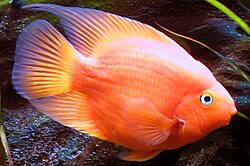
Darting or flashing in Blood Parrot Cichlids often indicates external irritants or stress, which can be serious if not addressed promptly. Owners should first ensure the tank conditions are optimal for this semi-aggressive species. Quick action is crucial to prevent further stress or injury.
Blood Parrot Cichlid Darting or Flashing: Common Causes
Poor Water Quality
Most LikelyHigh ammonia or nitrite levels can cause irritation and erratic behavior.
Inadequate Tank Size
Most LikelyInsufficient space can lead to stress and aggressive behavior.
Poor Diet
PossibleLack of variety or poor nutrition can weaken the fish's immune system, making it more susceptible to irritants.
External Parasites
PossibleParasites like ich can cause irritation and flashing.
Tank Mates
Less CommonIncompatible tank mates can cause stress and aggression.
How to Diagnose the Cause
Follow these steps in order. Stop when you identify a likely cause and move to treatment.
- Check water parameters for ammonia, nitrite, and nitrate levels.
Use a test kit to ensure the tank is within the optimal range for Blood Parrot Cichlids.
Recommended: Water test kit - Inspect the tank for any visible signs of parasites or disease.
Look for spots, scales, or other abnormalities on the fish's body.
- Evaluate the tank size and the number of fish present.
Ensure the tank is large enough for the number of fish and that they are compatible with each other.
- Assess the diet and feeding routine.
Check if the diet is balanced and varied, and that the fish are receiving the right amount of food.
- Observe the behavior of the fish in different tank conditions.
Note if the behavior changes when the tank is cleaned or when the water temperature is adjusted.
How to Treat Blood Parrot Cichlid Darting or Flashing
- Improve water quality by increasing the water flow and changing the filter media if necessary.
- Remove any visible parasites using a suitable treatment, following the manufacturer's instructions.
- Ensure the tank size is adequate and consider rearranging the tank to reduce stress.
- Adjust the diet to include a variety of high-quality foods and reduce feeding frequency if needed.
- Monitor the fish's behavior and consult a vet if the problem persists or worsens.
How to Prevent Blood Parrot Cichlid Darting or Flashing
When to See a Vet
🔬 AI Symptom Checker
Not sure what's wrong? Describe your fish's symptoms to the FishCare AI and get an instant diagnosis.
Check Symptoms →Frequently Asked Questions
This guide was reviewed for biological accuracy and practical aquarium care guidance. Always test water parameters before treating a sick fish — poor water quality is the most common root cause. Consult an aquatic veterinarian if symptoms persist after 48 hours of correct treatment.
Sources: Merck Veterinary Manual — Aquarium Fishes · UF/IFAS Extension — Fish Health Management