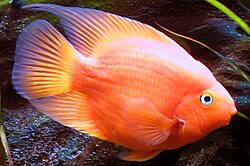
Black spots on a Blood Parrot Cichlid are often indicative of a bacterial or fungal infection, stress, or poor water quality. These spots can be unsightly and, if left untreated, can lead to more serious health issues. As an intermediate-level fish, owners should be vigilant about water parameters and diet to prevent this condition.
Blood Parrot Cichlid Black Spots: Common Causes
Bacterial Infection
Most LikelyPoor water quality, improper temperature, or introduction of new fish can introduce harmful bacteria.
Fungal Infection
PossibleExposure to fungi due to water temperature fluctuations or improper maintenance.
Stress
PossibleStress can weaken the immune system, making the fish more susceptible to infections.
Poor Diet
Less CommonLack of variety or proper nutrition can weaken the fish's immune system.
Genetic Factors
Less CommonSome blood parrots may have a predisposition to develop spots, which can be genetic.
How to Diagnose the Cause
Follow these steps in order. Stop when you identify a likely cause and move to treatment.
- Inspect the fish for other signs of disease, such as bloating, fin rot, or lethargy.
These can indicate underlying health issues contributing to the black spots.
Recommended: magnifying glass - Check water parameters, including ammonia, nitrite, nitrate, pH, and temperature.
Unbalanced water conditions can contribute to infections and stress.
- Monitor the fish's behavior and appetite.
Changes in behavior can indicate discomfort or illness.
- Examine the fish's environment for signs of aggression or overcrowding.
These can lead to stress and secondary infections.
- Conduct a physical examination if possible, looking for ulcers or open wounds.
These are common sites for infections.
Recommended: forceps
How to Treat Blood Parrot Cichlid Black Spots
- Perform a partial water change (20-30%) daily to reduce ammonia and nitrite levels.
- Adjust water parameters to optimal levels for Blood Parrot Cichlids: pH 6.5–7.5 and temperature 24–28°C.
- Use a broad-spectrum antibacterial or antifungal treatment as directed by a veterinarian.
- Isolate the affected fish to prevent the spread of infection to other tank inhabitants.
- Improve diet by providing high-quality, varied foods suitable for the Blood Parrot Cichlid's needs.
How to Prevent Blood Parrot Cichlid Black Spots
When to See a Vet
🔬 AI Symptom Checker
Not sure what's wrong? Describe your fish's symptoms to the FishCare AI and get an instant diagnosis.
Check Symptoms →Frequently Asked Questions
This guide was reviewed for biological accuracy and practical aquarium care guidance. Always test water parameters before treating a sick fish — poor water quality is the most common root cause. Consult an aquatic veterinarian if symptoms persist after 48 hours of correct treatment.
Sources: Merck Veterinary Manual — Aquarium Fishes · UF/IFAS Extension — Fish Health Management