A koi pond is not a scaled-up goldfish pond. Koi reach 24–36 inches, live for decades, eat heavily and produce a large ammonia load, so the pond has to be sized for the adult fish you will eventually have — not the 4-inch juveniles you buy. This page covers koi pond size, koi pond depth, and a build order that gets the water stable before the fish arrive.

Koi Pond Size: How Many Gallons Do Koi Need?
The working rule used by most koi clubs is 250 gallons per koi as an absolute minimum and 500 gallons per koi as the target, with a floor of about 1,000 gallons for any pond that will hold koi permanently. Below roughly 1,000 gallons, temperature and water chemistry swing too fast for a fish that will eventually weigh several pounds.
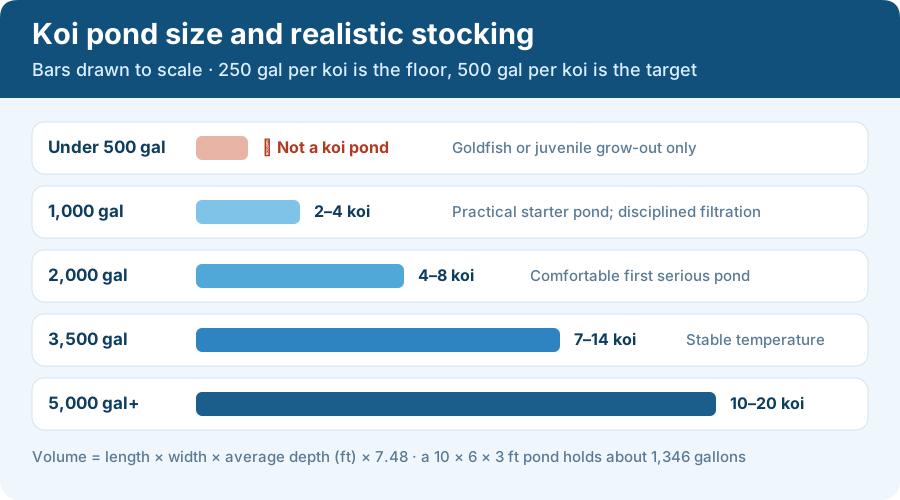
| Pond Volume | Realistic Koi Stocking | Notes |
|---|---|---|
| Under 500 gal | ❌ Not a koi pond | Goldfish or juvenile grow-out only |
| 1,000 gal | 2–4 koi | Practical starter pond; needs disciplined filtration |
| 2,000 gal | 4–8 koi | Comfortable for a first serious pond |
| 3,500 gal | 7–14 koi | Stable temperature, room for adult growth |
| 5,000 gal+ | 10–20 koi | Show-quality territory; supports jumbo koi |
To convert dimensions to volume: length × width × average depth (feet) × 7.48 = gallons. A 10 × 6 × 3 ft pond holds about 1,346 gallons. Our koi pond calculator does this for you for rectangular, circular, oval and irregular ponds, and the koi pond stocking calculator cross-checks the result against your koi count and filtration.
Koi Pond Depth: 3 Feet Minimum
Koi pond depth does three jobs: it buffers temperature, it gives the fish a refuge from herons and raccoons, and it provides an unfrozen layer in winter. The minimum working depth is 3 feet; 4 feet is the standard recommendation, and 6 feet is worth building where winters are severe or predators are a known problem.
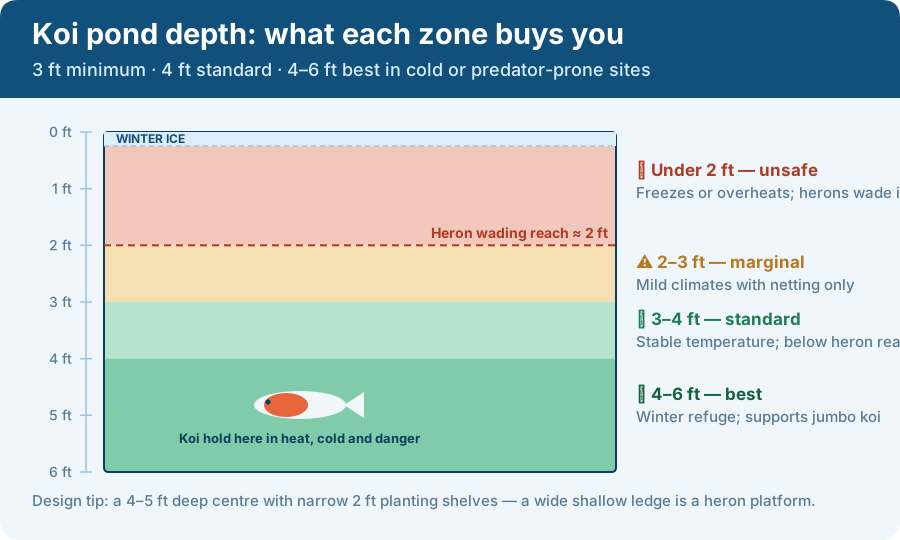
| Depth | Verdict | What it means in practice |
|---|---|---|
| Under 2 ft | ❌ Unsafe | Freezes or overheats; herons wade straight in |
| 2–3 ft | ⚠️ Marginal | Workable only in mild climates with predator netting |
| 3–4 ft | ✅ Standard | Stable temperature; koi can hold below heron reach |
| 4–6 ft | ✅ Best | Reliable winter refuge; supports jumbo koi growth |
A common design compromise is a deep central zone of 4–5 feet with shallower 2-foot shelves at the edges for plants. Keep the shelves narrow — a wide shallow ledge is a heron platform.
Koi Pond Setup, Step by Step
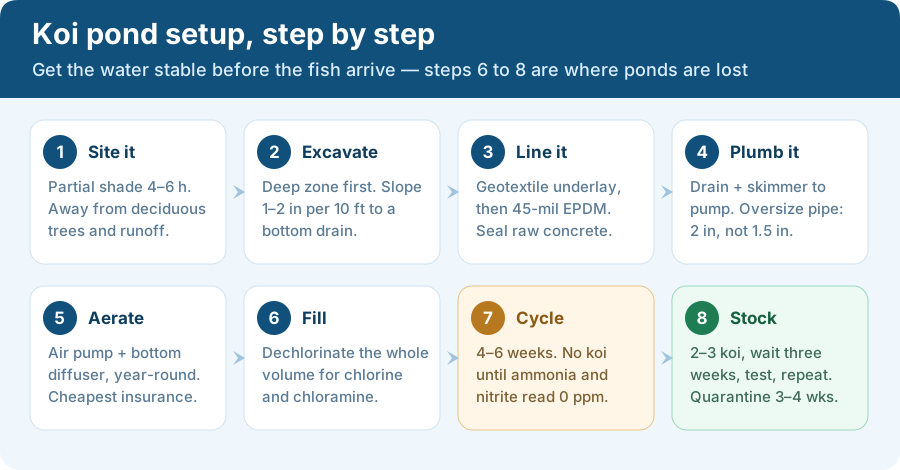
- Site it. Partial shade for 4–6 hours a day limits algae and summer heat. Stay clear of deciduous trees (leaf load) and root systems that will lift a liner. Never site a pond at the bottom of a slope that drains lawn chemicals into it.
- Excavate with the plumbing in mind. Dig the deep zone first, slope the floor 1–2 inches per 10 feet toward a bottom drain, and trench for return lines before you line anything.
- Underlay and liner. Geotextile underlay, then 45-mil EPDM rubber liner. EPDM is fish-safe, flexible in cold, and repairable. Concrete ponds work but must be sealed with a pond-rated coating — raw concrete leaches lime and drives pH above 9.
- Plumb the filtration. Bottom drain and skimmer feed the pump; the pump feeds mechanical filtration, then biological media, then back to the pond. Size the plumbing generously — 2-inch pipe on a 3,000-gallon pond, not 1.5-inch.
- Add aeration. An air pump with a bottom-mounted diffuser plate runs year-round. It is the single cheapest insurance policy in koi keeping.
- Fill and dechlorinate. Treat the whole volume for chlorine and chloramine before anything living goes in.
- Cycle the filter for 4–6 weeks. Dose ammonia or run a few hardy juveniles, and do not add your main koi until ammonia and nitrite both read 0 ppm. See the koi water parameters guide.
- Stock slowly. Add 2–3 koi, wait three weeks, test, then add more. Quarantine every new fish for 3–4 weeks in a separate tank.
Filtration and Turnover
Koi ponds are filtration projects with fish in them. Target a full turnover of pond volume every 1–2 hours — a 2,000-gallon pond wants a pump moving 1,000–2,000 GPH after head loss, not on the box rating.
The koi pond pump size calculator works out that head loss from your pipe diameter, run length and elbows, so you can compare pumps on flow at the head they will actually see.
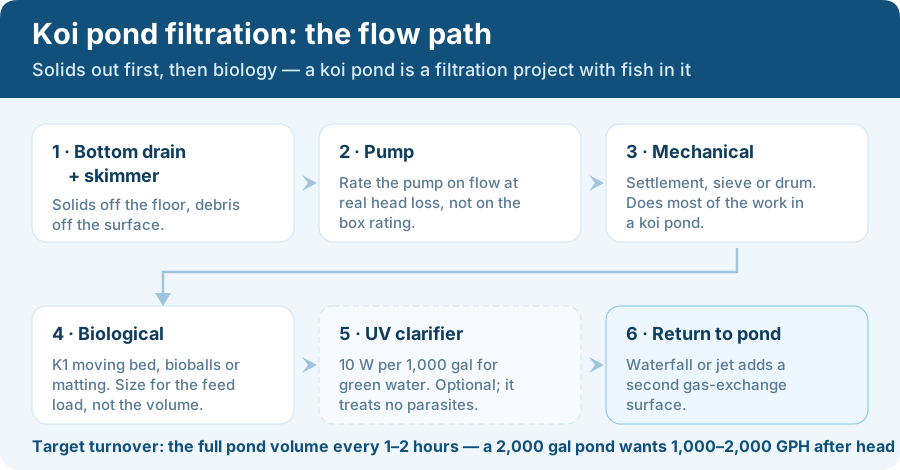
- Mechanical stage: settlement chamber, sieve or drum filter. Removes solids before they rot into ammonia. This stage does most of the work in a koi pond.
- Biological stage: moving-bed media (K1), bioballs or matting. Size for the feed load, not the volume — heavily fed koi need more biomedia than the pond size alone suggests.
- UV clarifier: 10 watts per 1,000 gallons controls green water. It does not replace filtration, and it does not treat parasites on the fish.
- Bottom drain: the difference between a pond you skim and a pond that actually cleans itself. Retrofit is expensive; build it in from the start.
Aeration and Oxygen
Koi need dissolved oxygen above 6 mg/L, and warm water holds less of it. Summer nights are the danger window: plants and algae consume oxygen after dark, and a pond that reads fine at noon can hit critical levels at 5 a.m. Run aeration 24 hours a day, and add a second air stone before a heat wave rather than after.
Signs of low oxygen: koi crowding the waterfall or gasping at the surface in the early morning, listless fish at midday, several fish affected at once.
Winter and Predator Planning
In freezing climates the goal is not a heated pond — it is a hole in the ice for gas exchange. A floating de-icer plus a relocated air stone at mid-depth (not on the bottom, which would destroy the warm layer koi rest in) keeps the pond safe. Stop feeding entirely below 50°F (10°C).
For predators: depth plus steep sides defeats herons; netting defeats herons and leaves; a covered cave or length of 8-inch pipe on the pond floor gives koi somewhere to hide when a raccoon visits.
What a Koi Pond Actually Costs
| Component | Typical range (2,000 gal pond) |
|---|---|
| Excavation | $0 (DIY) – $2,000 |
| Liner + underlay | $400 – $900 |
| Pump | $150 – $500 |
| Filtration system | $500 – $2,500 |
| Aeration + UV | $150 – $400 |
| Plumbing + bottom drain | $200 – $700 |
| Running cost | $25 – $70 per month (pump, air, de-icer) |
Frequently Asked Questions
How big should a koi pond be?
Allow 250 gallons per koi as an absolute minimum and 500 gallons per koi as the target, with a floor of about 1,000 gallons for any permanent koi pond. A 1,000-gallon pond suits 2-4 koi; 2,000 gallons suits 4-8.
How deep should a koi pond be?
Three feet is the minimum, 4 feet is the standard recommendation, and 5-6 feet is worth building in cold climates or where herons and raccoons are a problem. Depth stabilises temperature and gives koi a refuge below heron reach.
Can koi live in a small pond?
Koi reach 24-36 inches and live 25+ years, so a pond under 500 gallons cannot support them long term. Small ponds are suitable for goldfish, or as temporary grow-out space for juvenile koi that will move to a larger pond.
How many gallons per koi fish?
250 gallons per koi is the working minimum and 500 gallons per koi is the recommended figure. The lower number assumes strong filtration, a bottom drain and constant aeration.
Do koi ponds need a pump running all the time?
Yes. The pump and the air pump run 24 hours a day year-round. Biological filter bacteria die within hours without flow, and oxygen levels fall fastest overnight when a stopped pump does the most damage.