← Complete Angelfish Care Guide
What Do Angelfish Eat?
Angelfish are omnivorous cichlids that need more than one flake or pellet. The best angelfish diet combines a nutritious staple with appropriately sized frozen or live foods. Feeding should support steady growth, bright color and healthy fins without leaving waste in the aquarium.
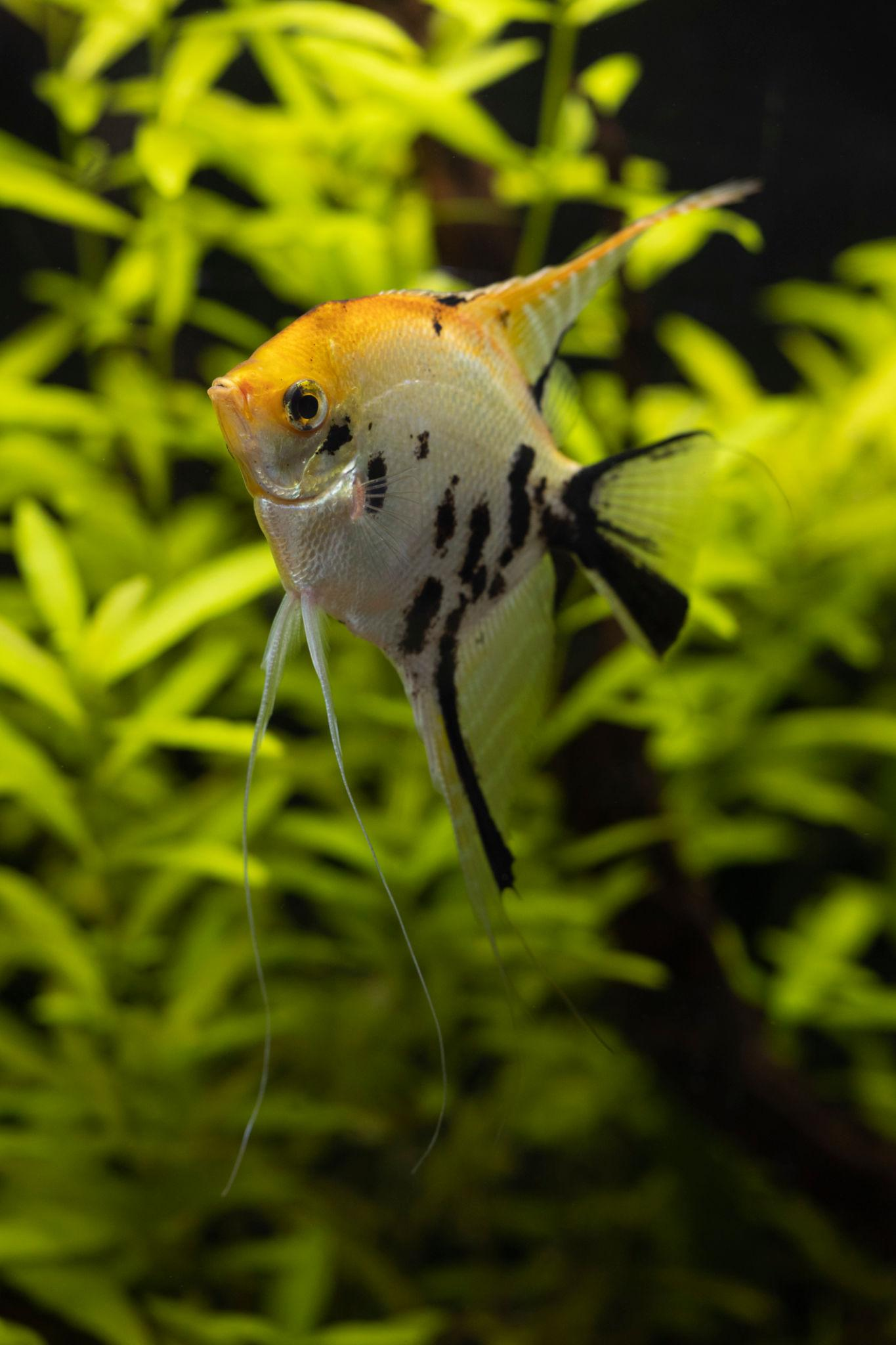
Quick feeding plan
- Adults: two small meals per day.
- Juveniles: three to five smaller meals while growing.
- Each meal should be finished within three to four minutes.
- Remove leftovers and test nitrate regularly.
Best angelfish food
Choose a quality cichlid pellet or tropical flake as the daily staple. Look for a named fish or shrimp protein near the beginning of the ingredient list and avoid foods that create excessive dust. Frozen bloodworms, brine shrimp and daphnia add variety and are useful for conditioning a breeding pair. Spirulina flakes, blanched spinach or other vegetable ingredients can be offered occasionally, but angelfish do not need a vegetarian diet.
Feeding angelfish fry
Newly free-swimming fry need tiny foods they can capture. Newly hatched brine shrimp are a common choice; prepared fry foods can supplement them. Feed small portions frequently and siphon debris carefully. Fry grow unevenly, so observe whether smaller individuals are reaching food.
Common mistakes
Overfeeding is more dangerous than a missed meal. A swollen belly, cloudy water or rising nitrate means portions are too large. Avoid feeder fish because of disease risk, and do not use human food. Feed slowly so shy fish are not outcompeted.
FAQ
What does an angelfish eat in a community tank?
It can eat pellets, flakes, frozen bloodworms, brine shrimp and daphnia. Use food large enough for the angel but not so large that tank mates cannot eat.
What does angel fish eat when breeding?
Offer richer frozen or live foods for a short conditioning period, then return to measured portions.
See water, tank and breeding advice in the angelfish care pillar guide →